
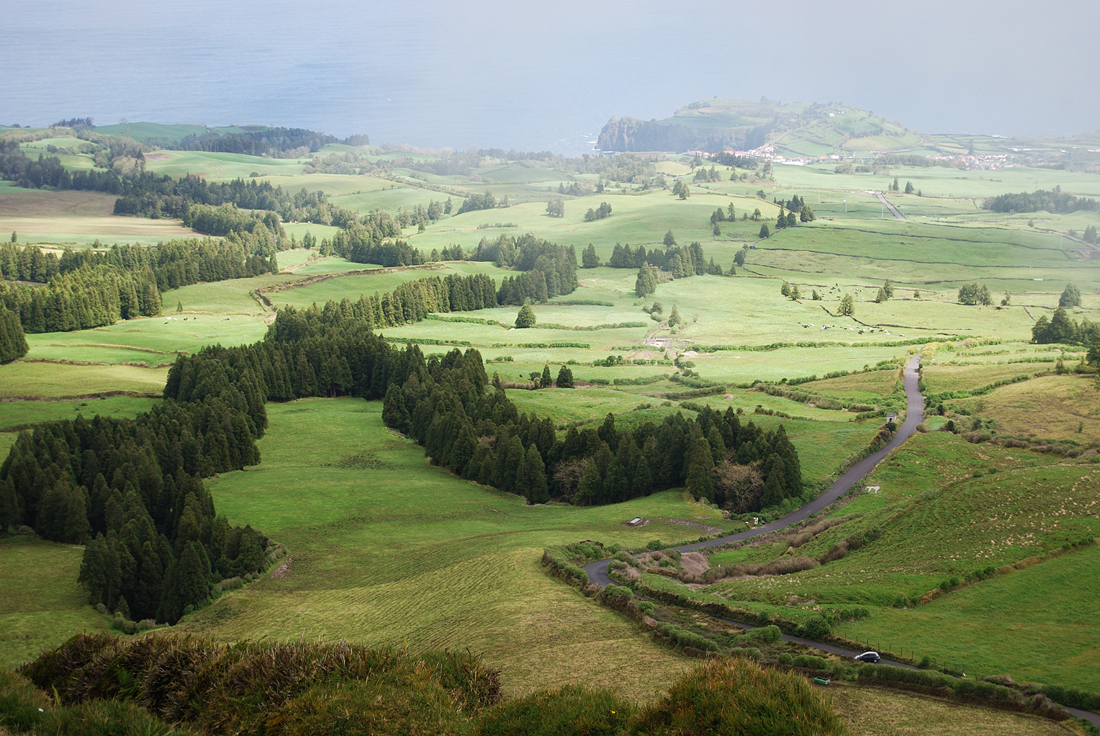
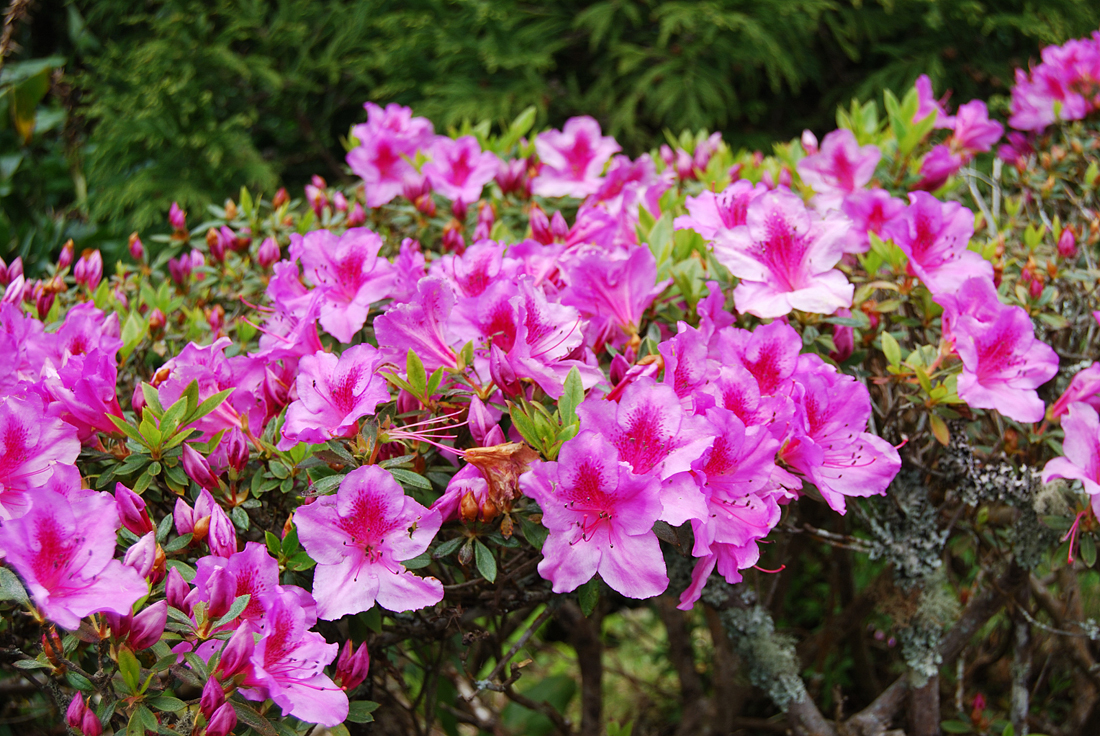
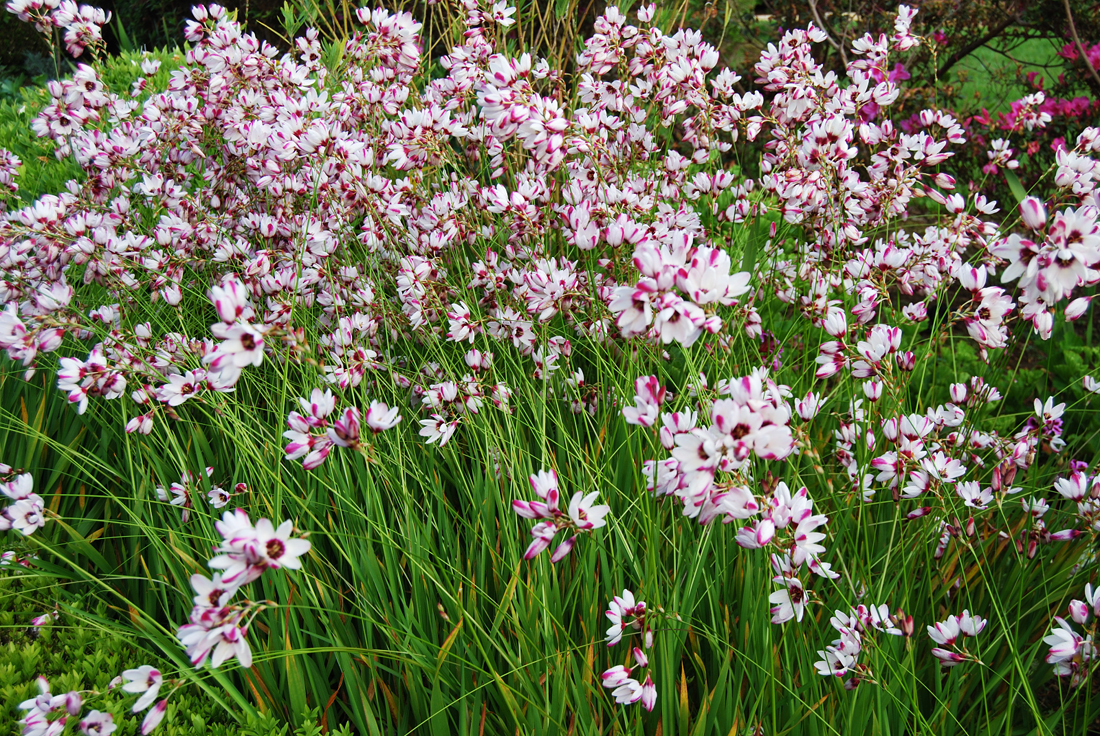
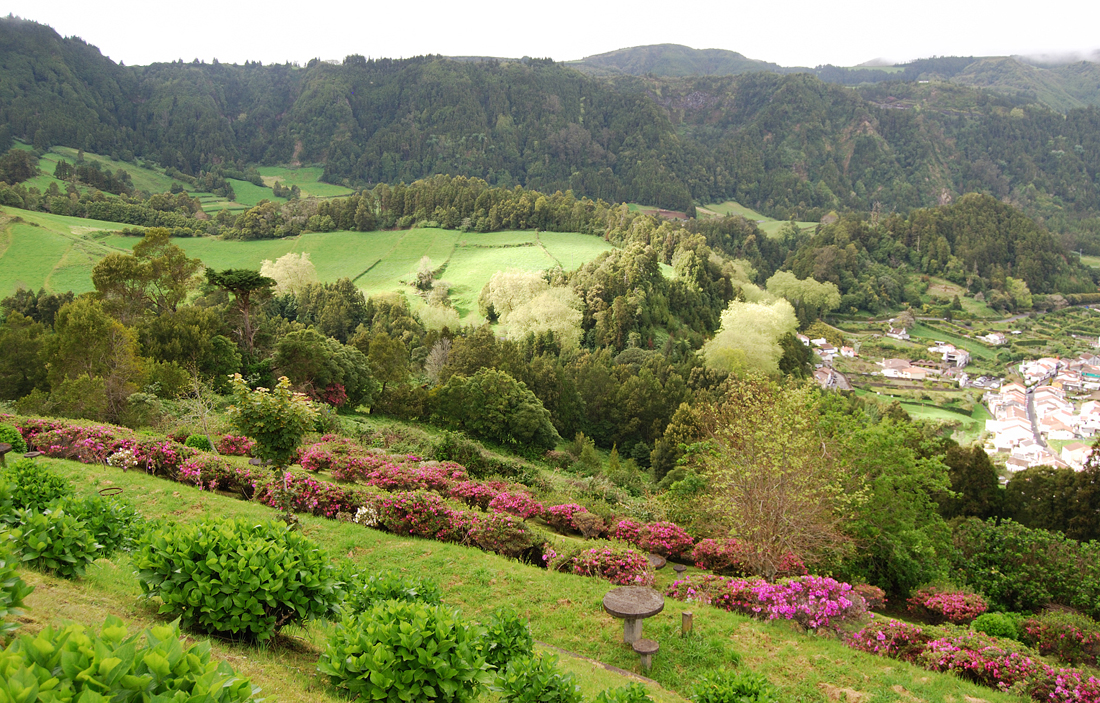
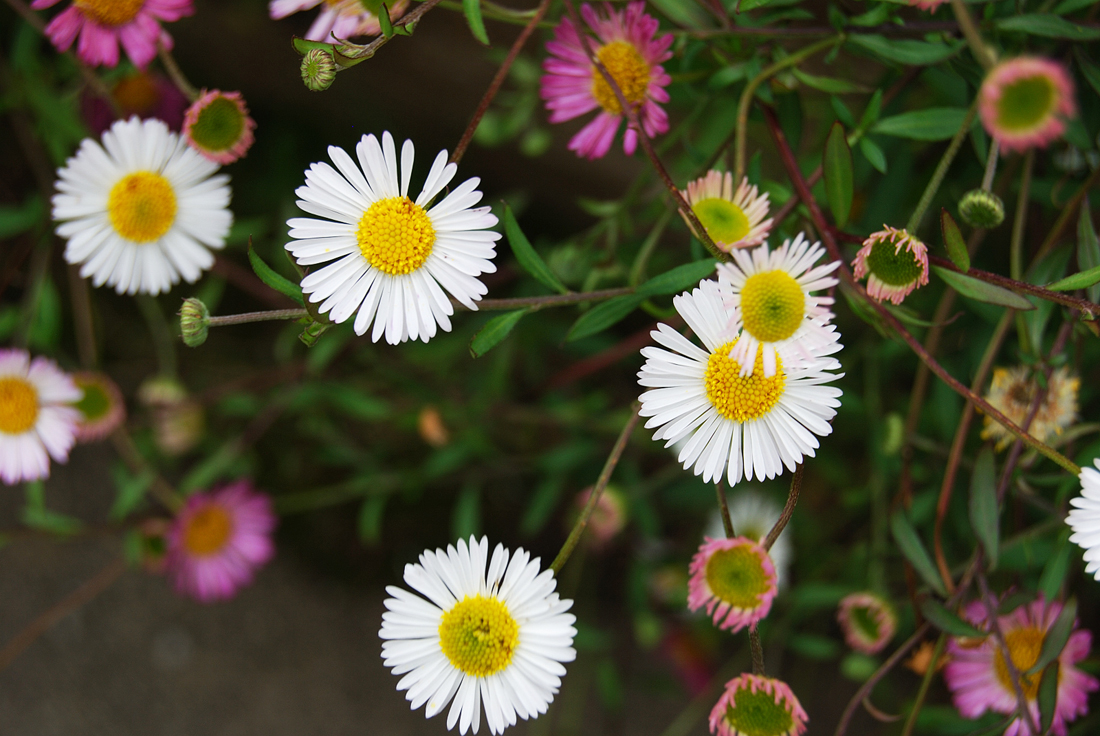
 São Miguel, one of the nine islands of the Azores and the largest among Portugal’s archipelago, was blooming with vegetation and pink flowers. In April, during the low season, there was no traffic and no lines to enter tourist sites. Plenty of cruise tours were available for whale
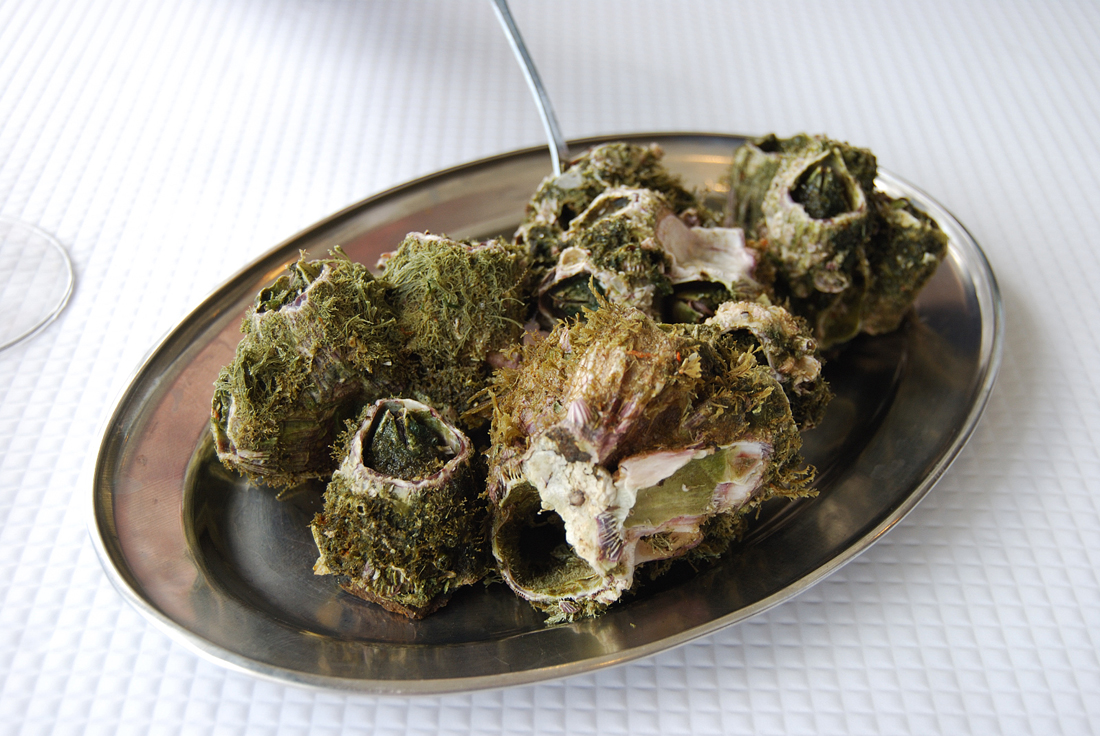
  watching along the Ponte Delgada port. The only places with a wait were the restaurants. The seafood variety in São Miguel was fresh, and there are virtually nowhere else in the world where barnacles (“cracas” in Portuguese) are served in restaurants and has geothermal cooking. The bread and cheese were made locally or sourced from one of the other Azorean islands. Driving through the winding, narrow cobblestone streets with cars parked bumper to bumper felt all too familiar. We’ve been to Lisbon and Maui’s Hana Highway, so the experience brought back memories.
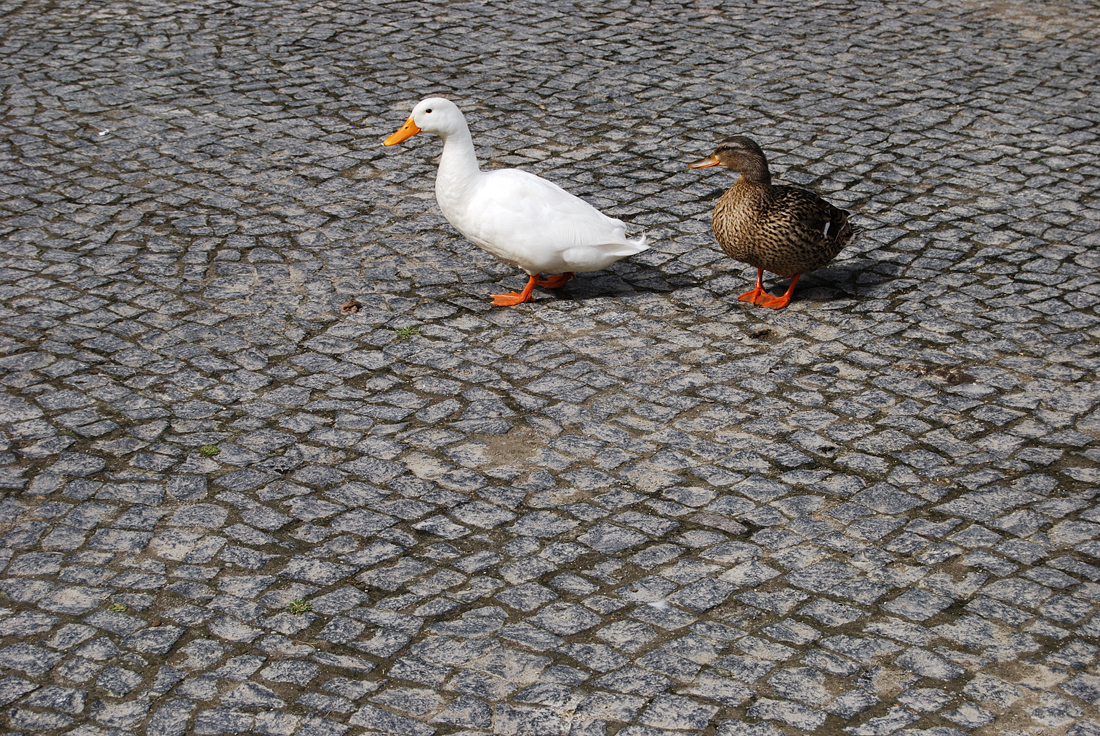
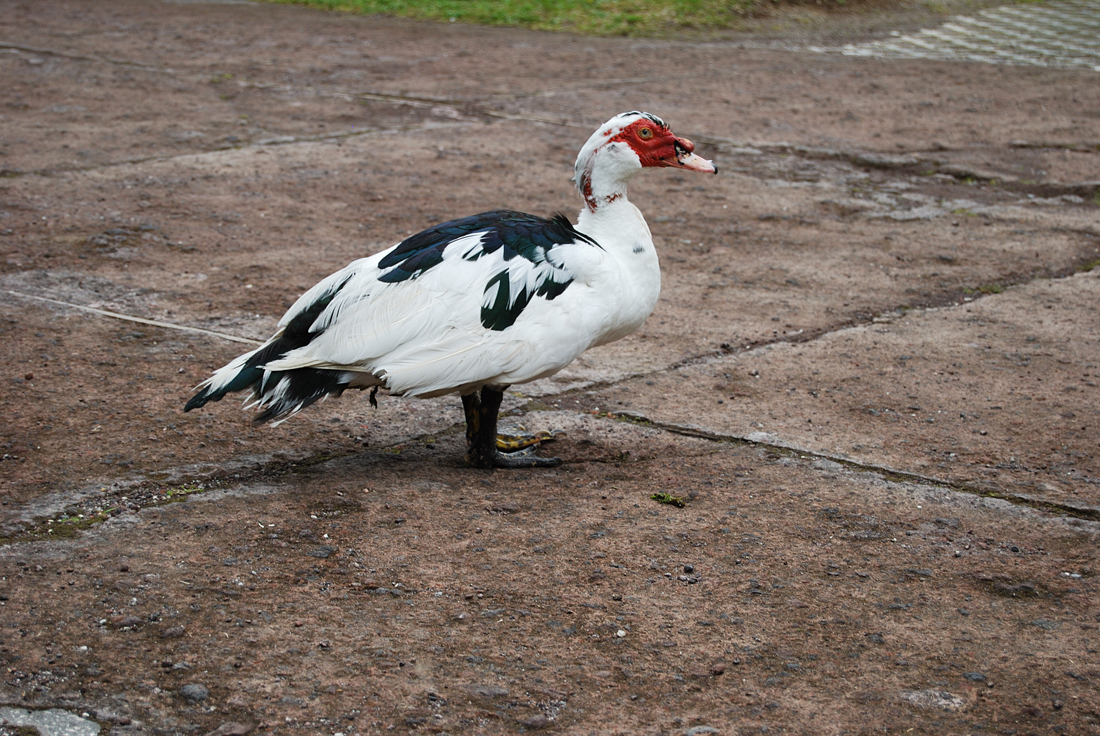
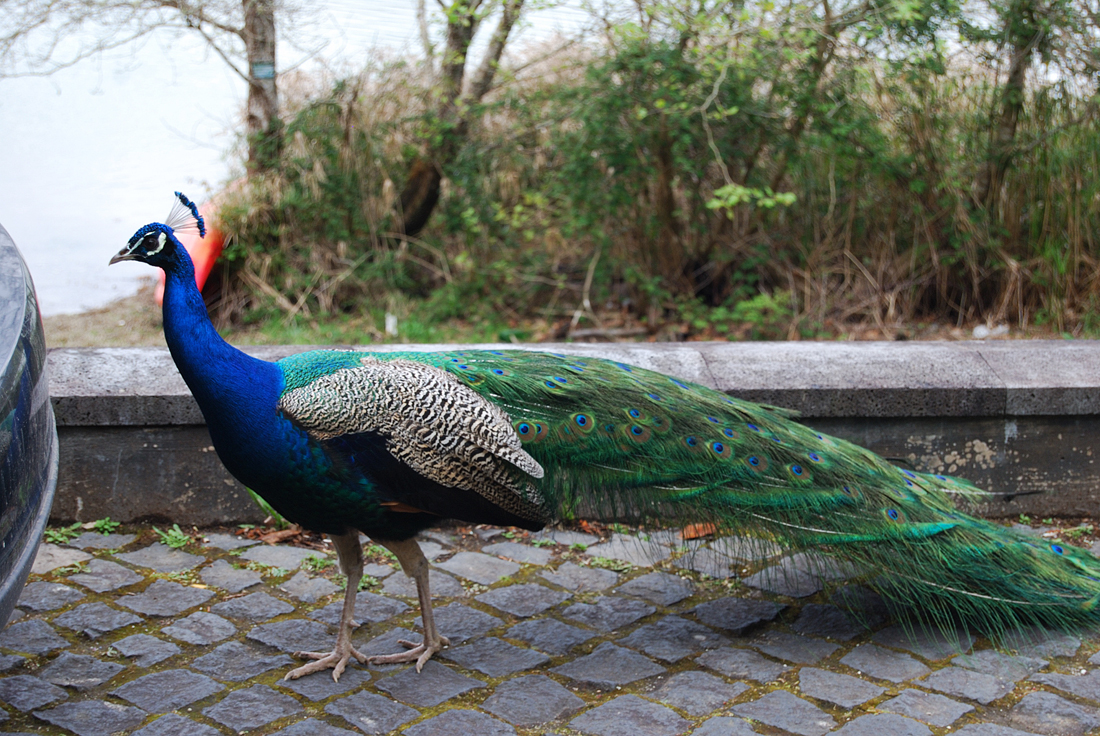
Upon arriving at the Ponte Delgada airport, the chirping of birds and their echoes could be heard loudly, as if we had entered an aviary. 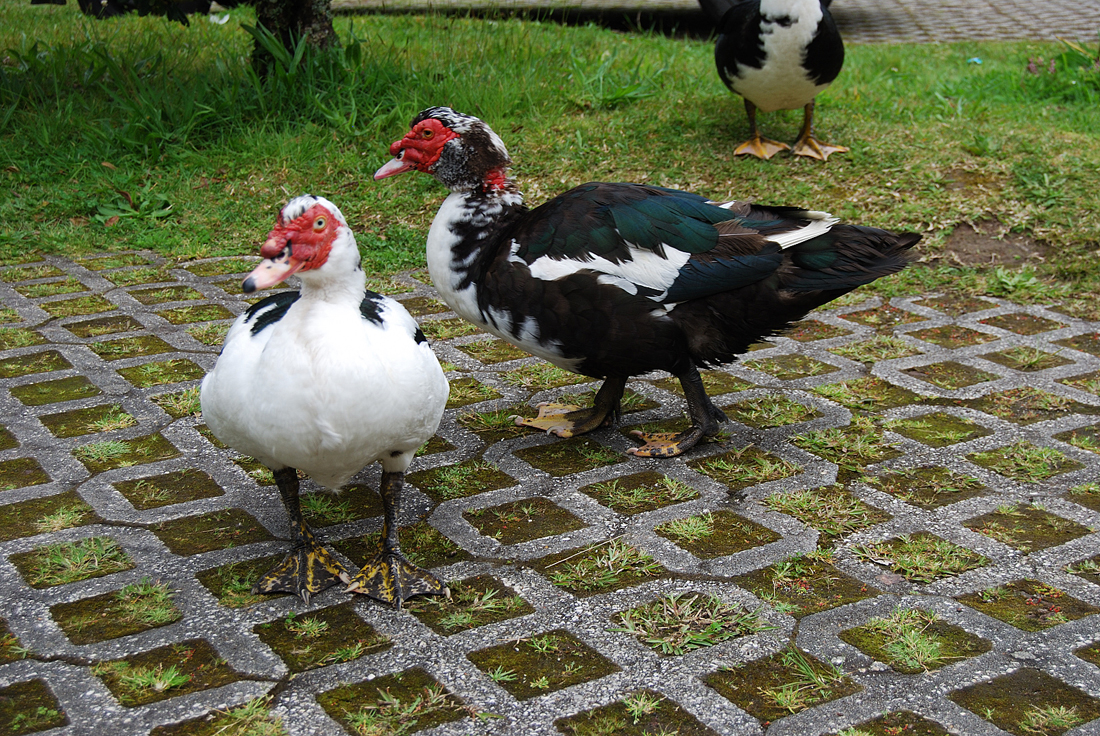 It seemed surreal, but after exploring the island, particularly the gardens of Lagoa das Furnas and the caldeiras, it became clear the sounds were real. It was a rare treat, reminding me of my time in the Amazon rainforest. Birds of many kinds filled the island, making it a perfect place for bird-watching.
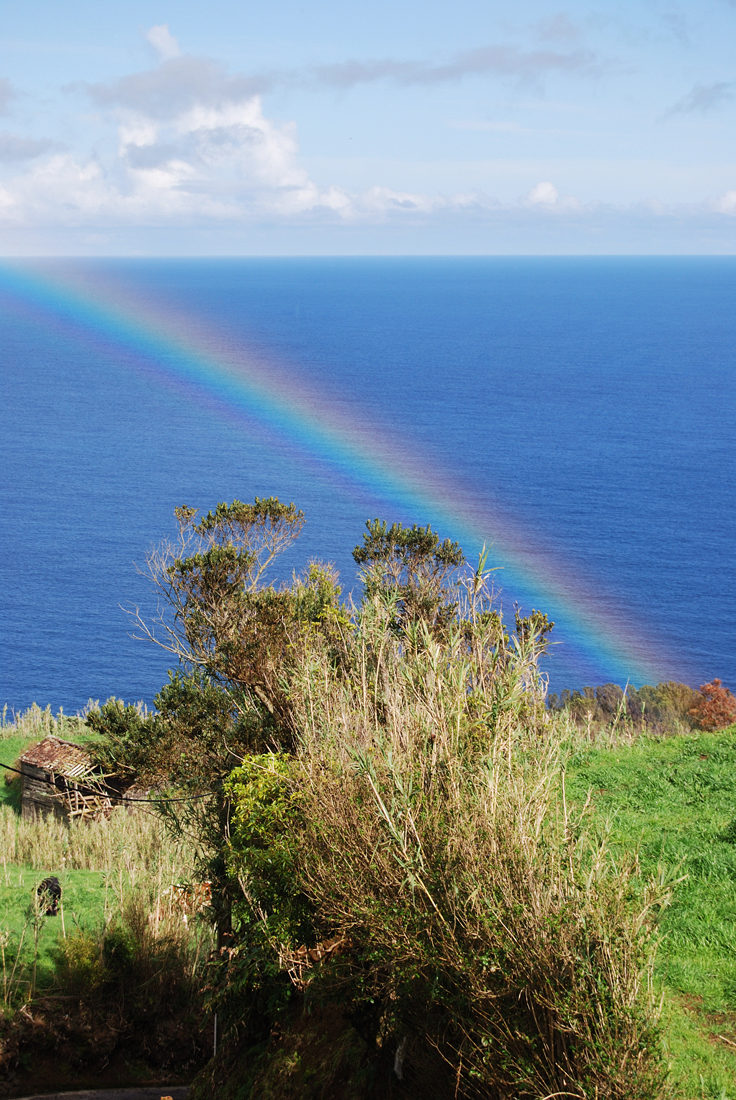
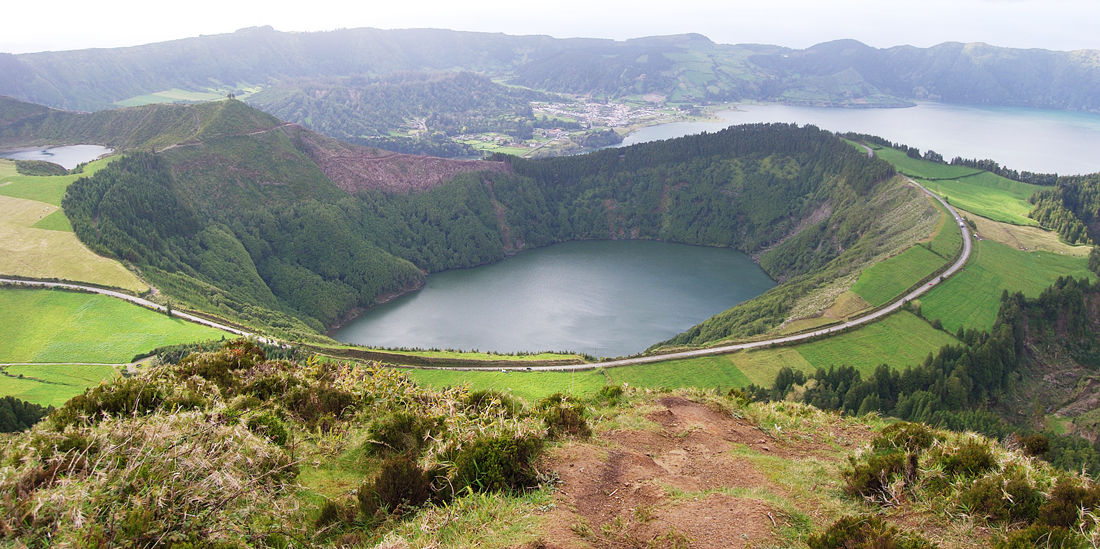
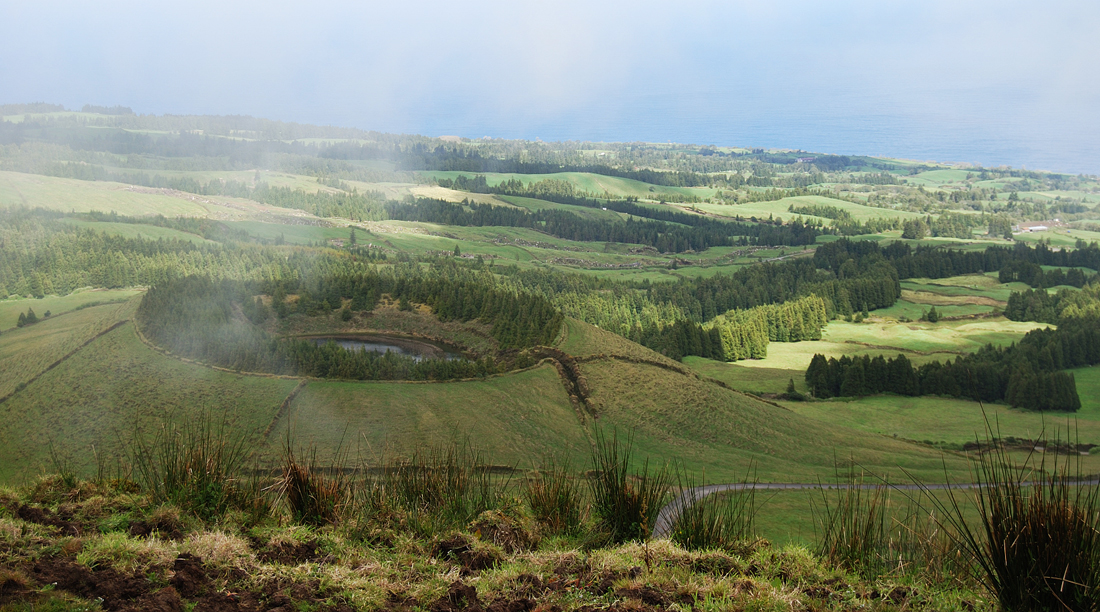
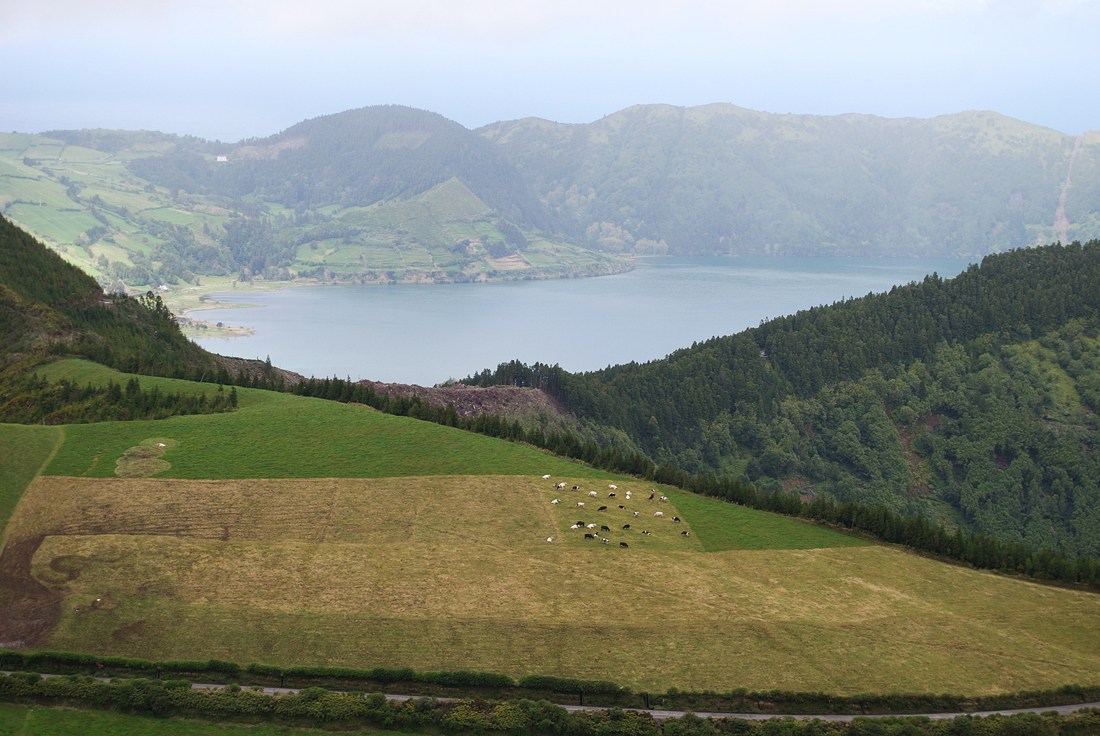
The weather forecast had predicted rain throughout the trip, but in reality, every day was sunny, with only one night of downpour. There were moments of  intermittent drizzle, which led to rainbows on a couple of occasions. The clouds were dense, and some areas of the island had heavy fog, especially around Lagoa Empadadas and Lagoa do Fogo. Whenever sunlight hit parts of the lakes, the water appeared jade green. This phenomenon was especially vivid in Sete Cidades, with its twin lakes.
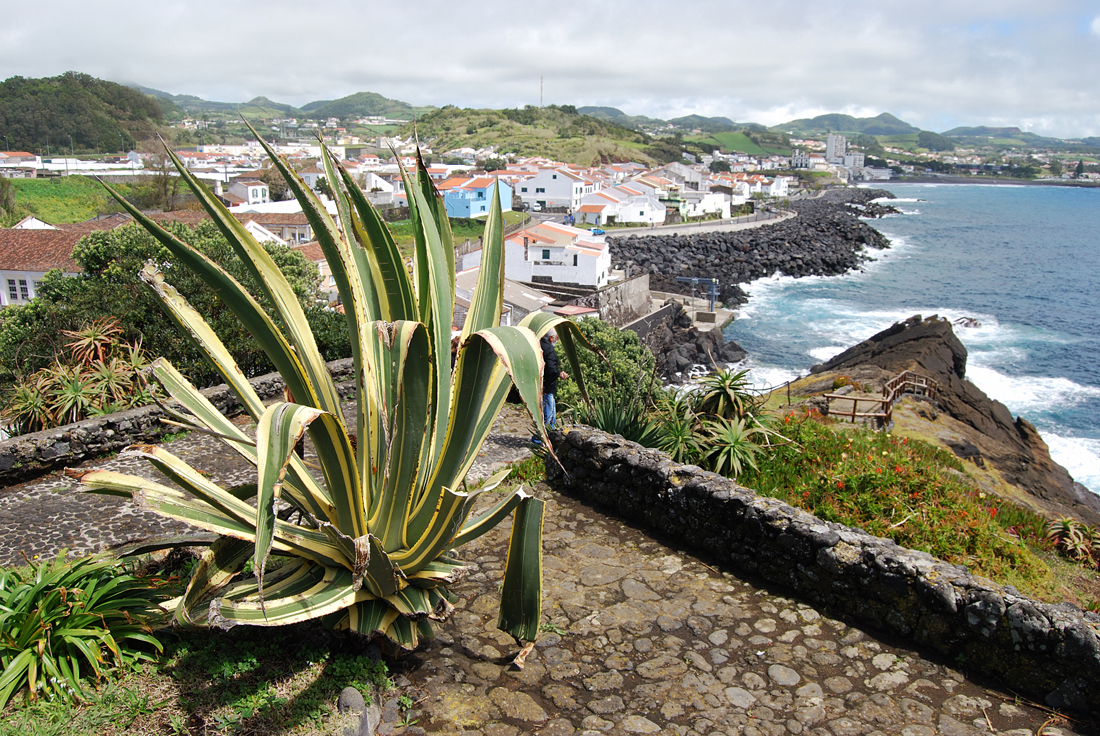
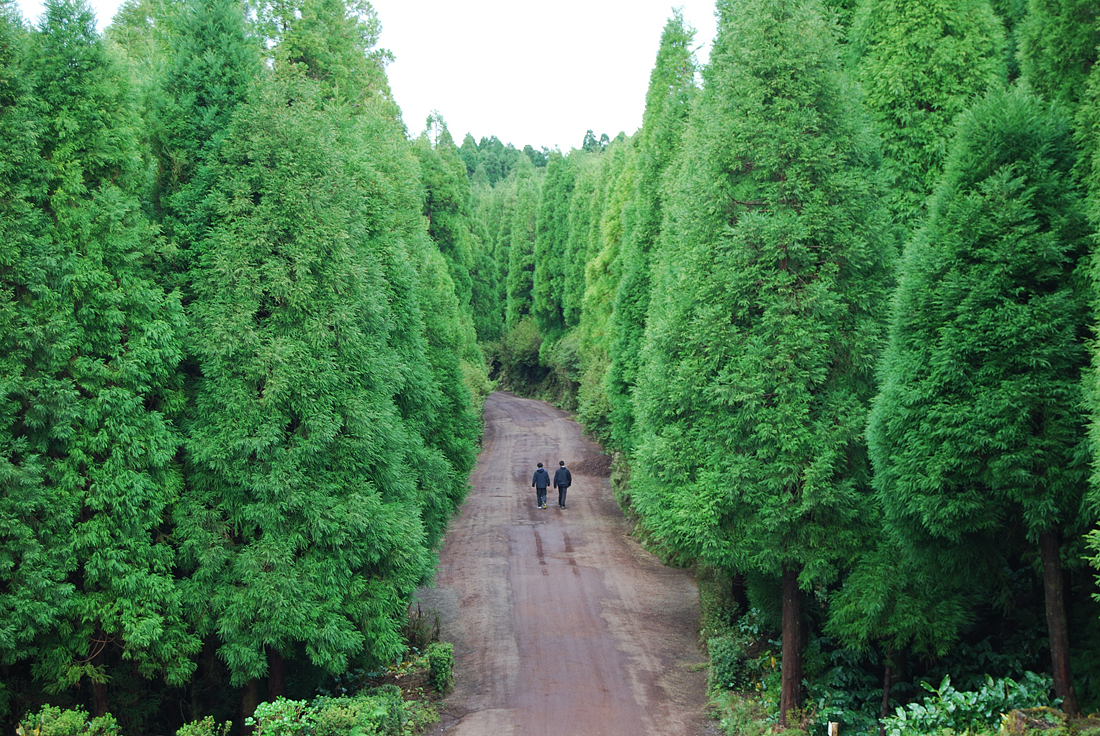
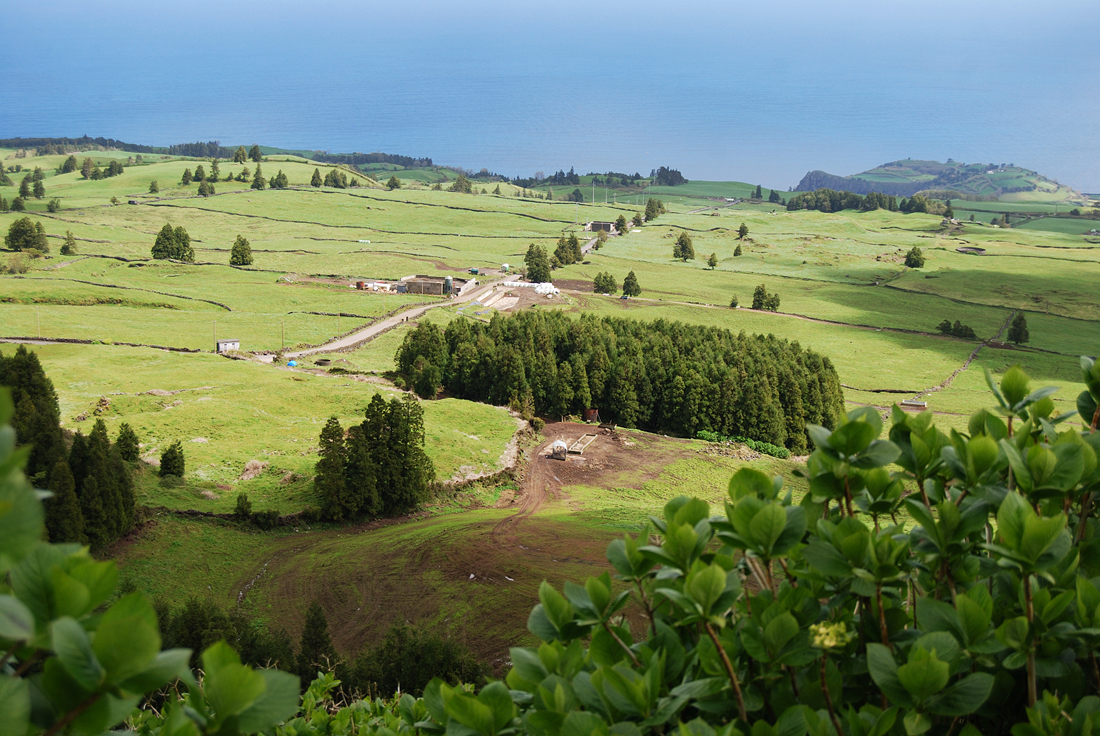
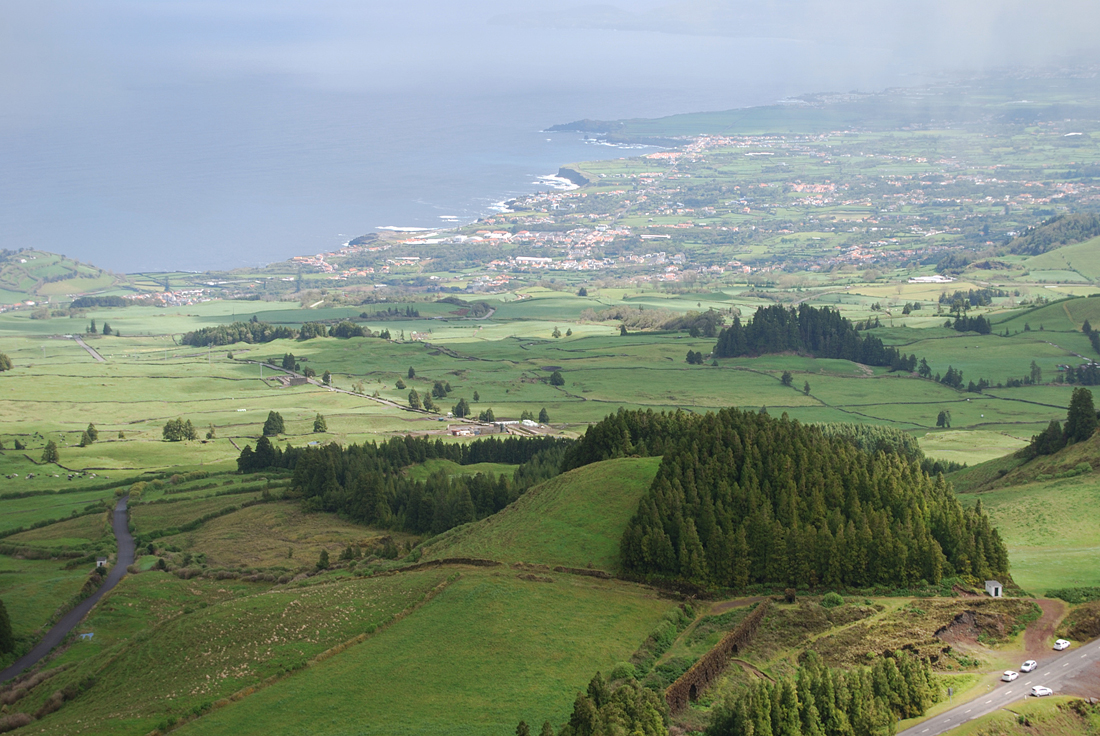
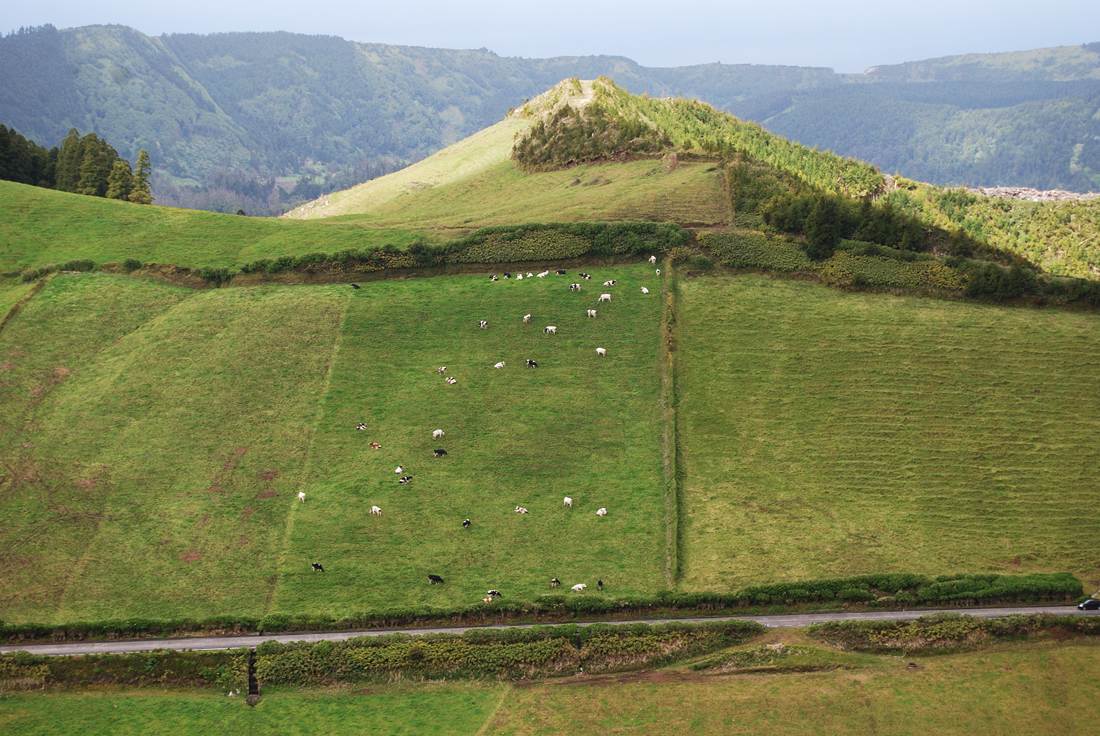
São Miguel Island is slightly larger than Hawaii’s Maui. Using a similar approach to our time in Maui, we divided our days on the island into exploring its four regions: the North, East, South, and West. This island in the Portuguese archipelago is a fertile garden—open for all to dip their toes into.
Northern flank of São Miguel
Caldeira Velha, Chá Gorreana Tea Plantation, Arruda Pineapple Plantation
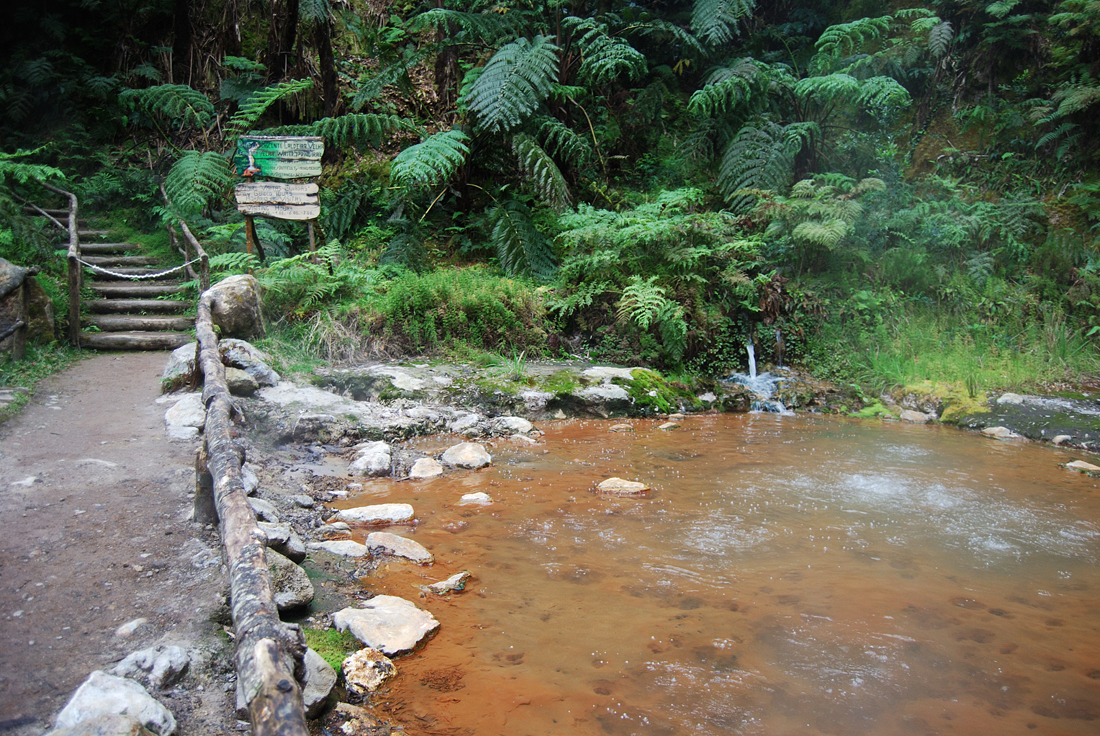
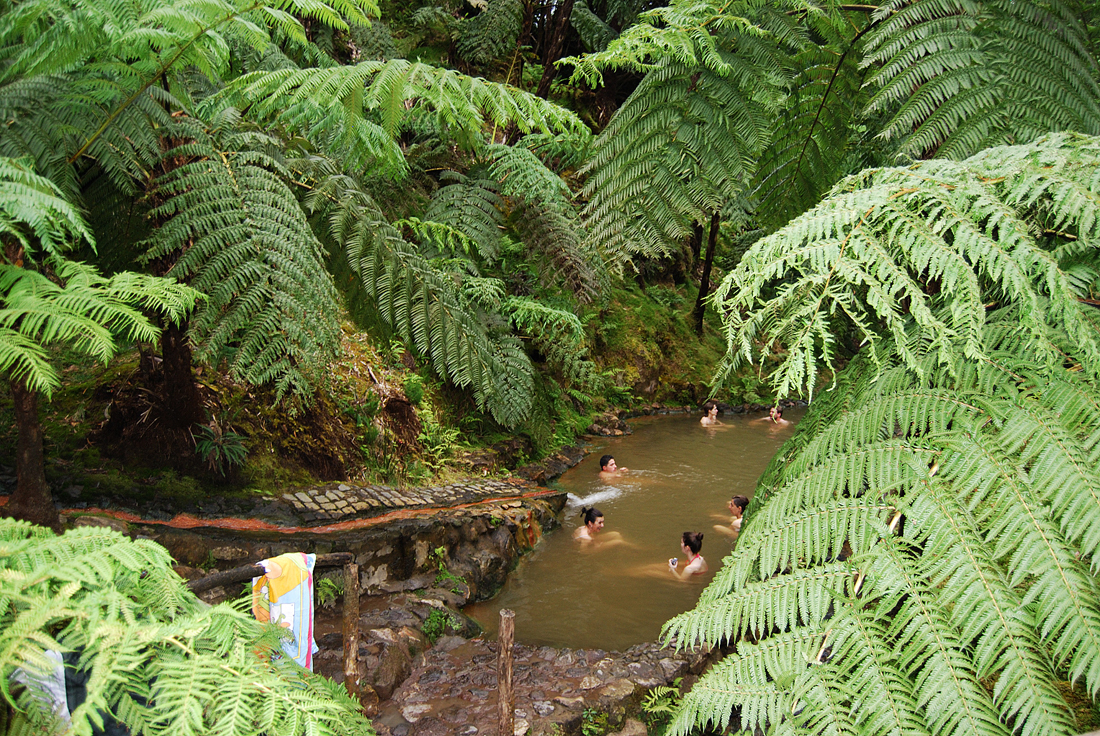
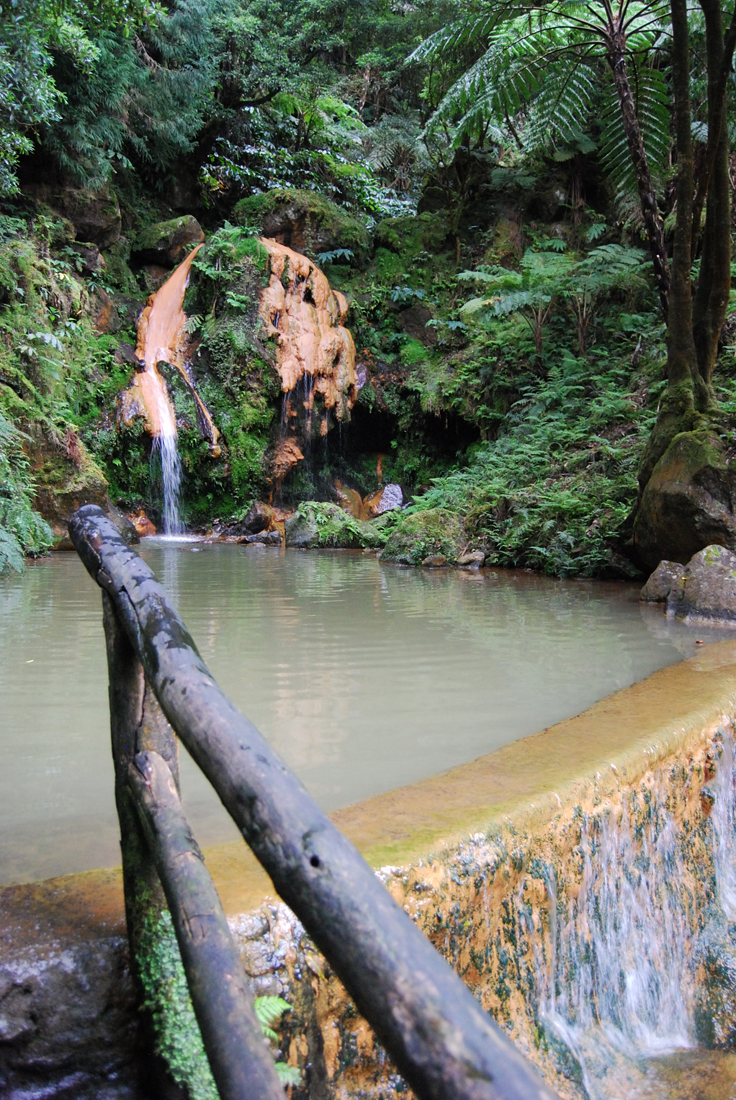 The Caldeira Velha hot springs was about body temperature and shallow enough to sit comfortably. Surrounded by lush vegetation, I felt as if we were in the jungle. Though it was raining and cold in the evening, we enjoyed nice conversations with fellow travelers from around the globe in just that one hot spot.
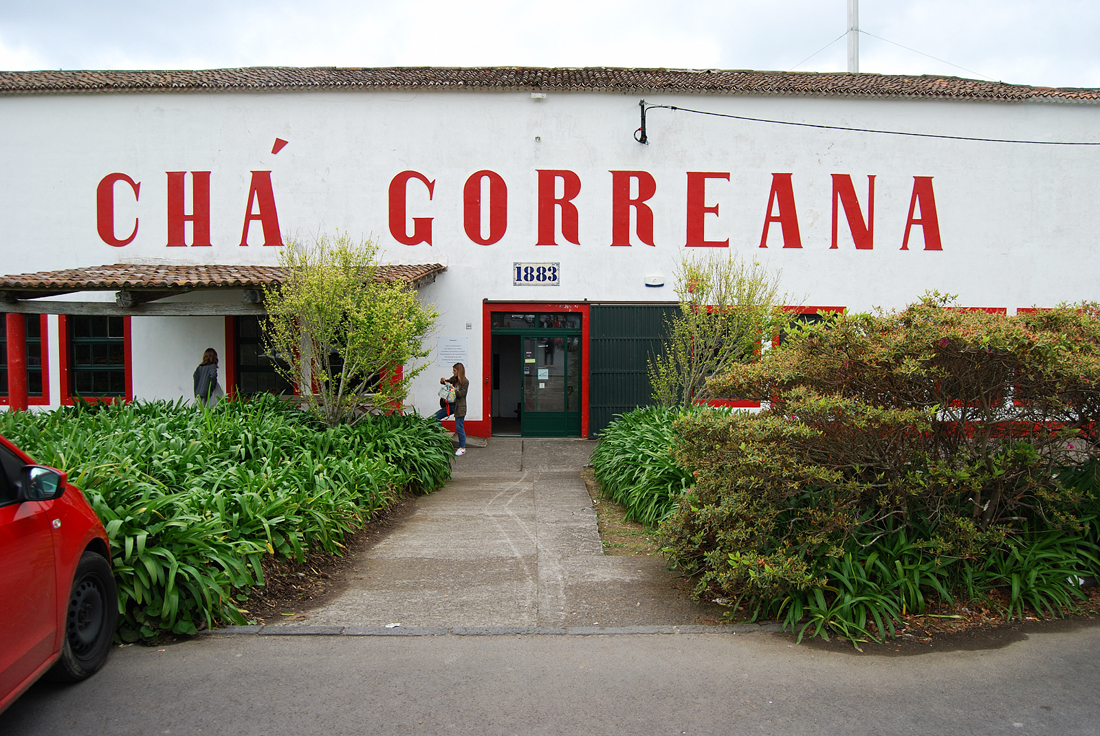
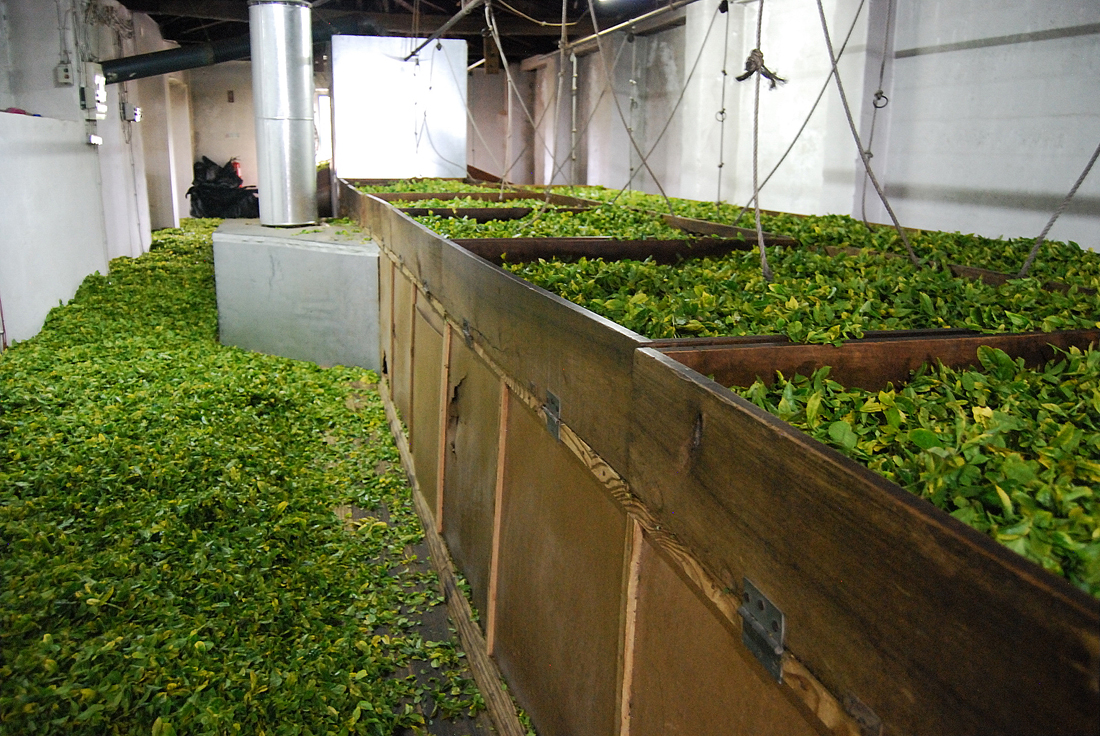
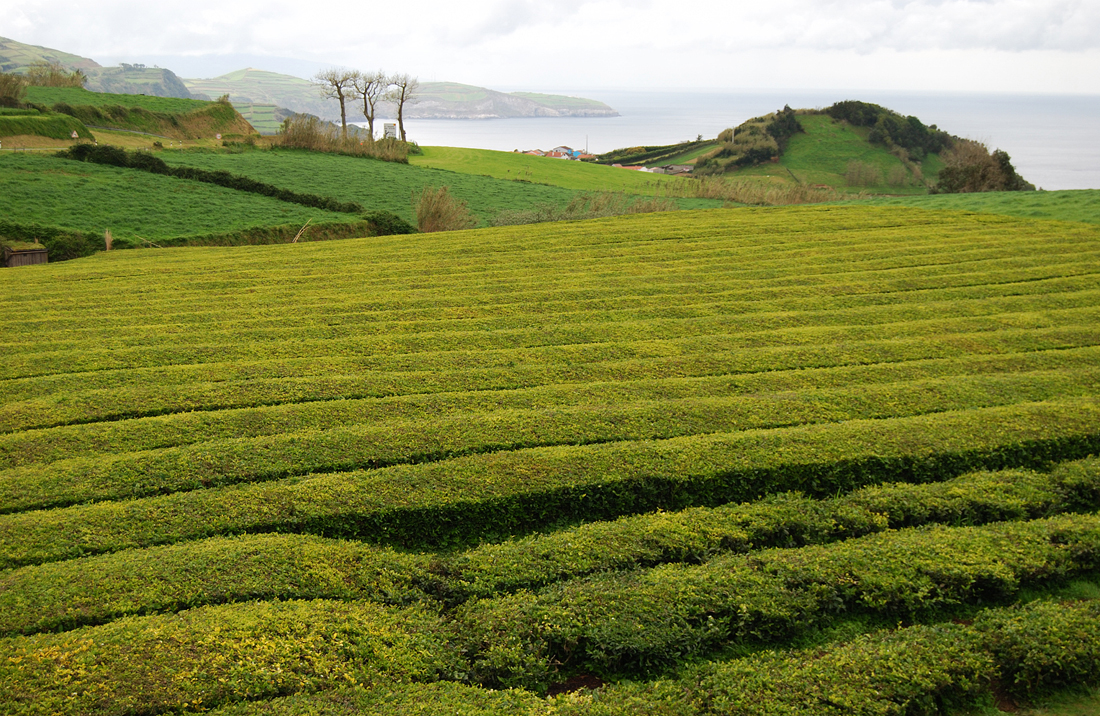
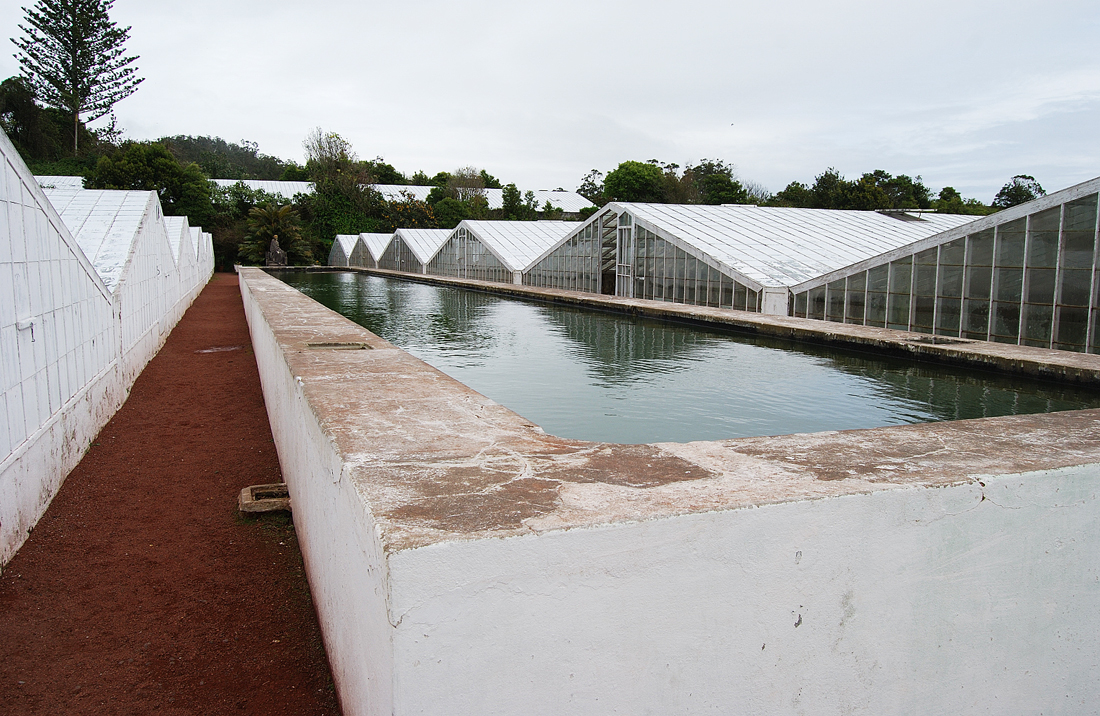
Other places we visited included the Arruda Pineapple plantation and Chá Gorreana Tea Plantation, the oldest and only tea plantation in Europe. We observed the equipment used to process tea at the factory and received a complimentary tasting of the black tea. 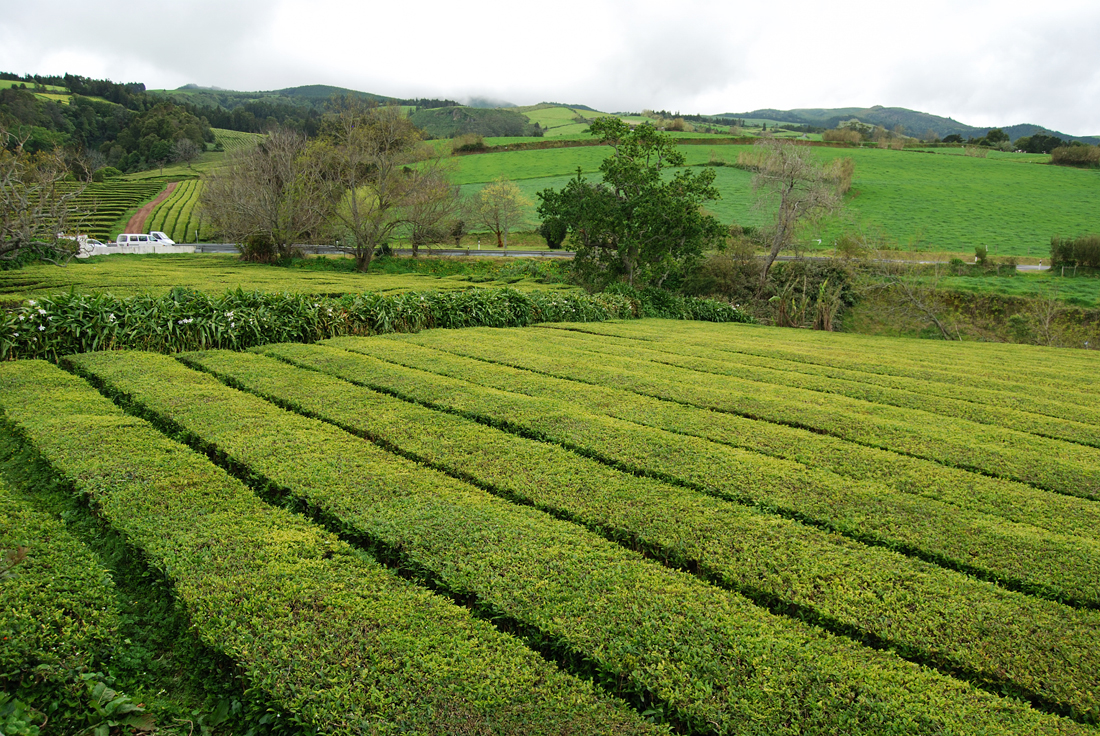 Even during this low tourist season, the parking lot was completely packed. This was the most popular spot we encountered during our time on the island.
Getting to the Arruda Pineapple plantation was a different story. It was difficult to find this place—not even the GPS or our maps could pinpoint its location. After a few wrong turns into a farm, passing through narrow passages, and getting directions from locals in Portuguese, we finally arrived. 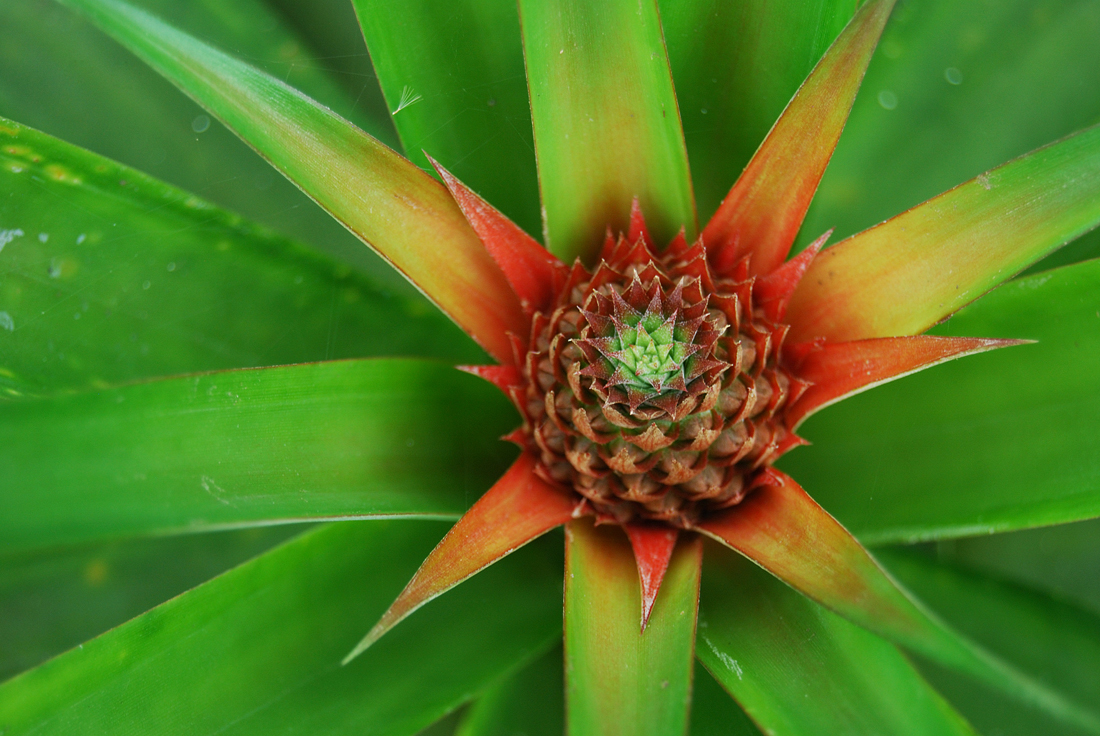 Apparently, we weren’t the only ones having trouble; we met another couple along the way who were also searching for the plantation.
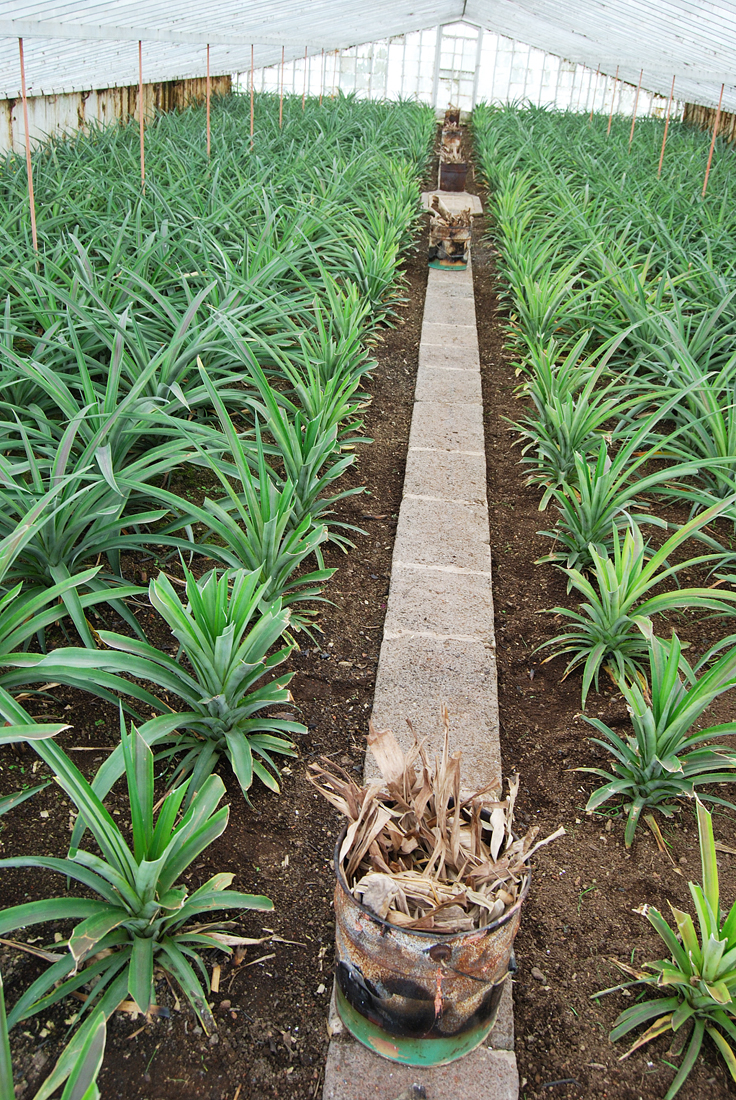
The special Azorean process of growing pineapples was more involved than one might expect, especially considering it takes two full years to grow them. Walking through each greenhouse gave us a peek into the work and care behind the fruit. An interesting detail was how they use smoke from burning leaves and branches inside the greenhouse to aid the growth process. This experience at both the tea and pineapple plantations deepened my appreciation for the food we buy and consume.
View Gallery


Eastern flank of São Miguel
Nordeste, Ponta do Sossego, Ponta da Madrugada
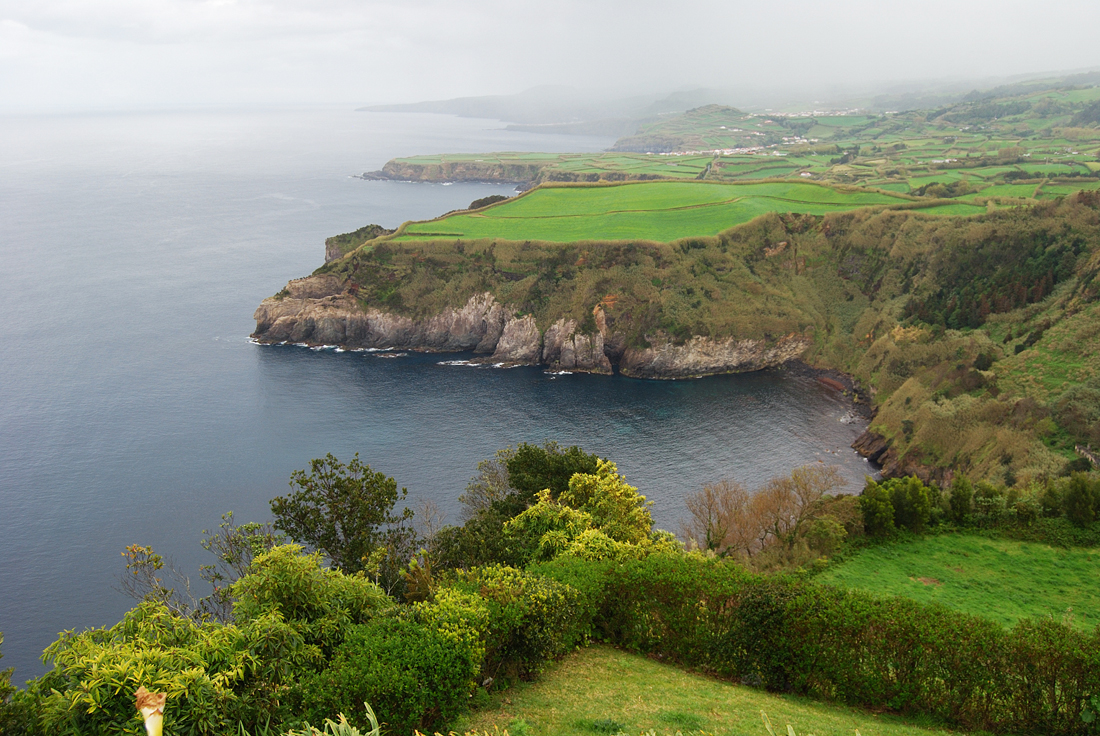
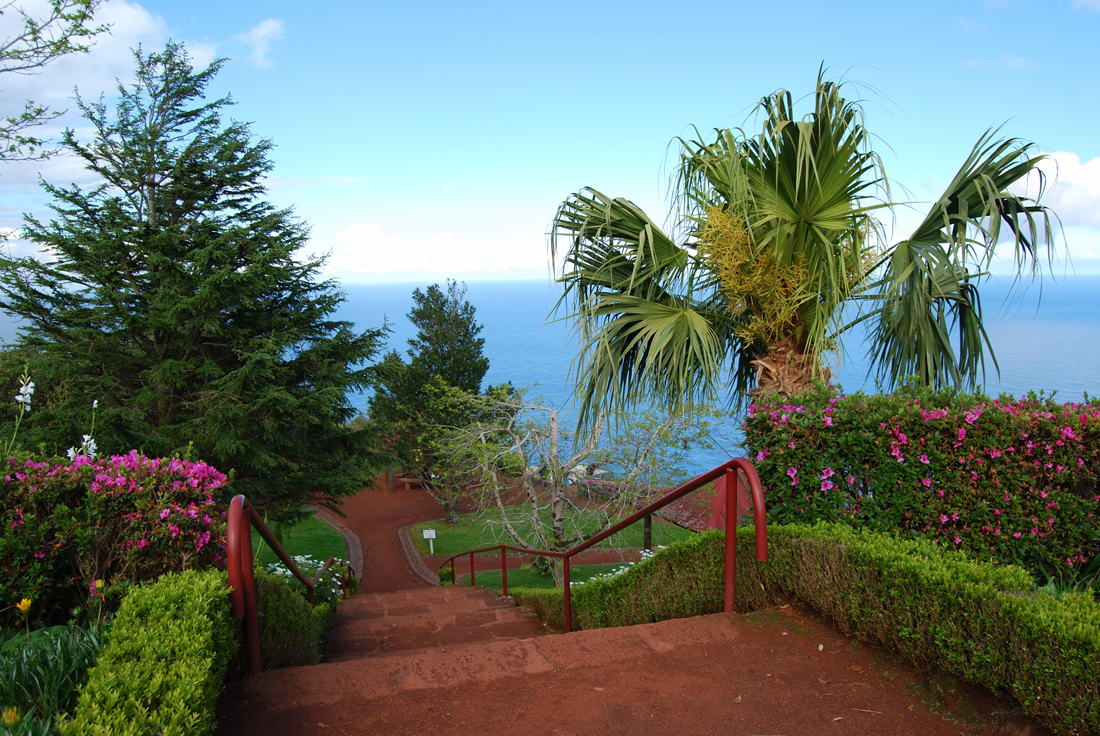
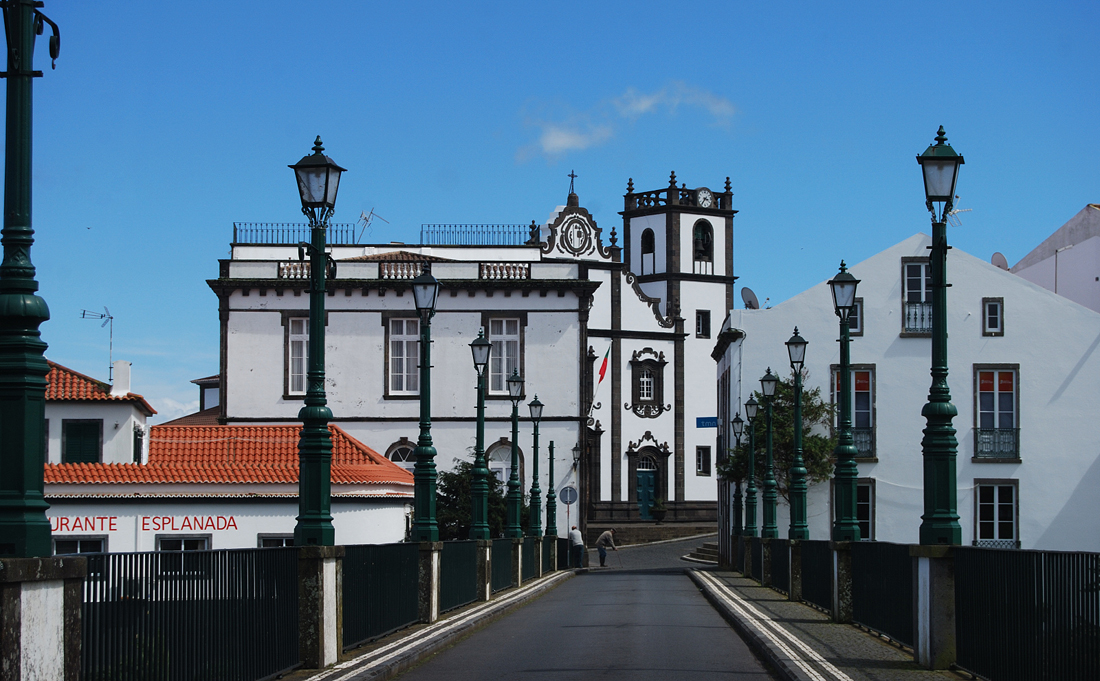
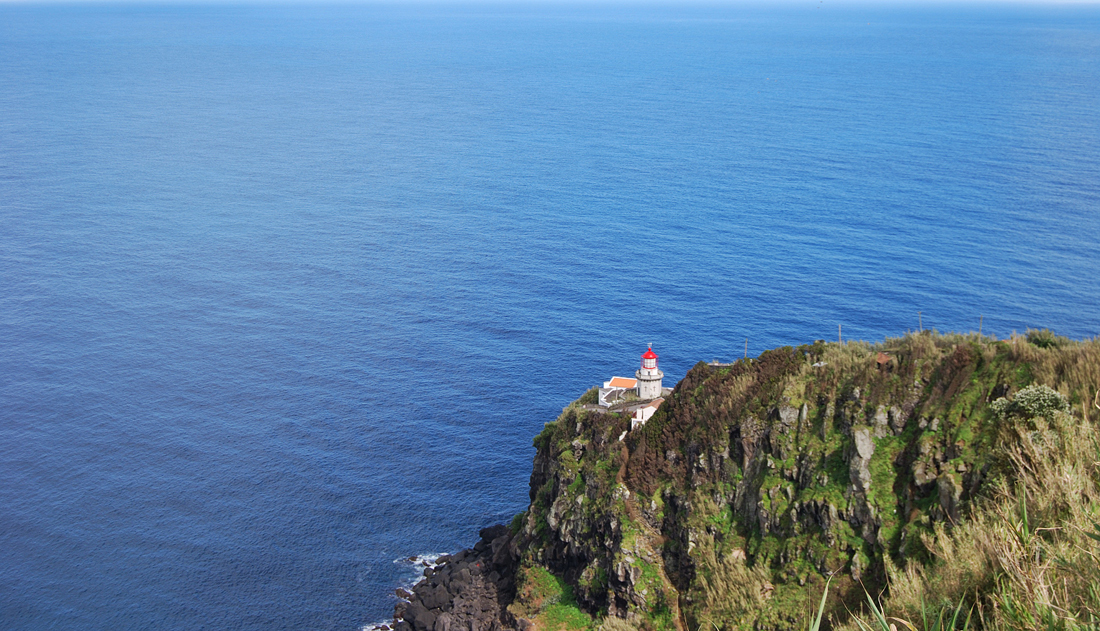
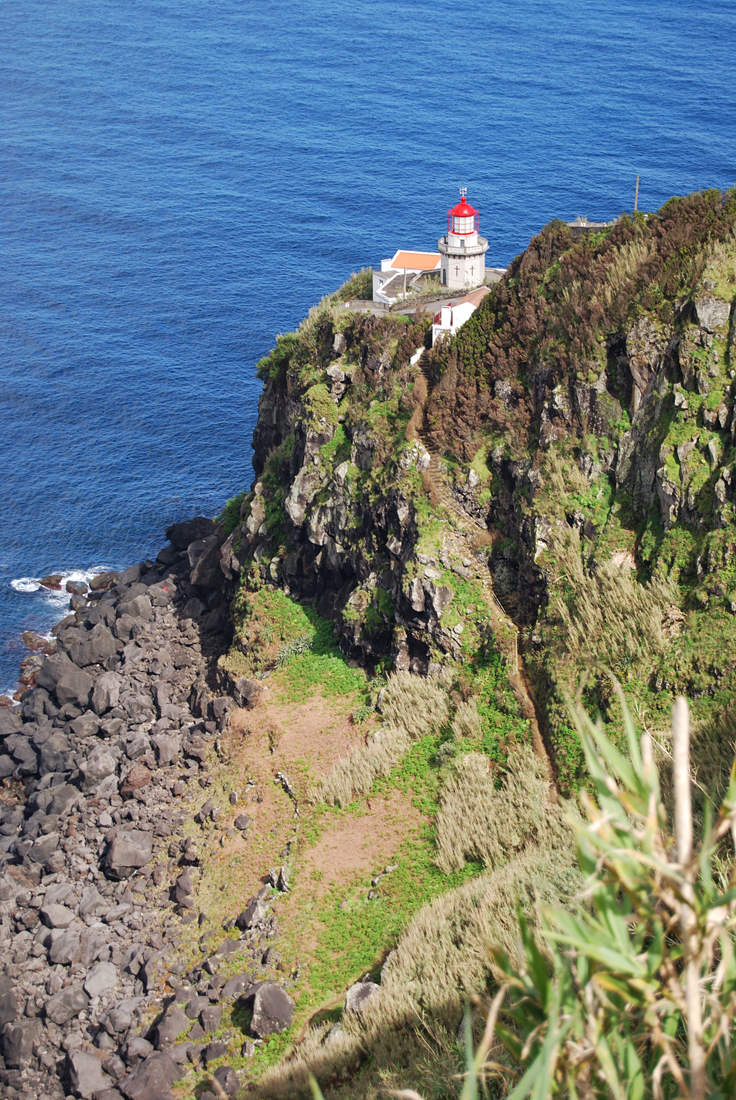
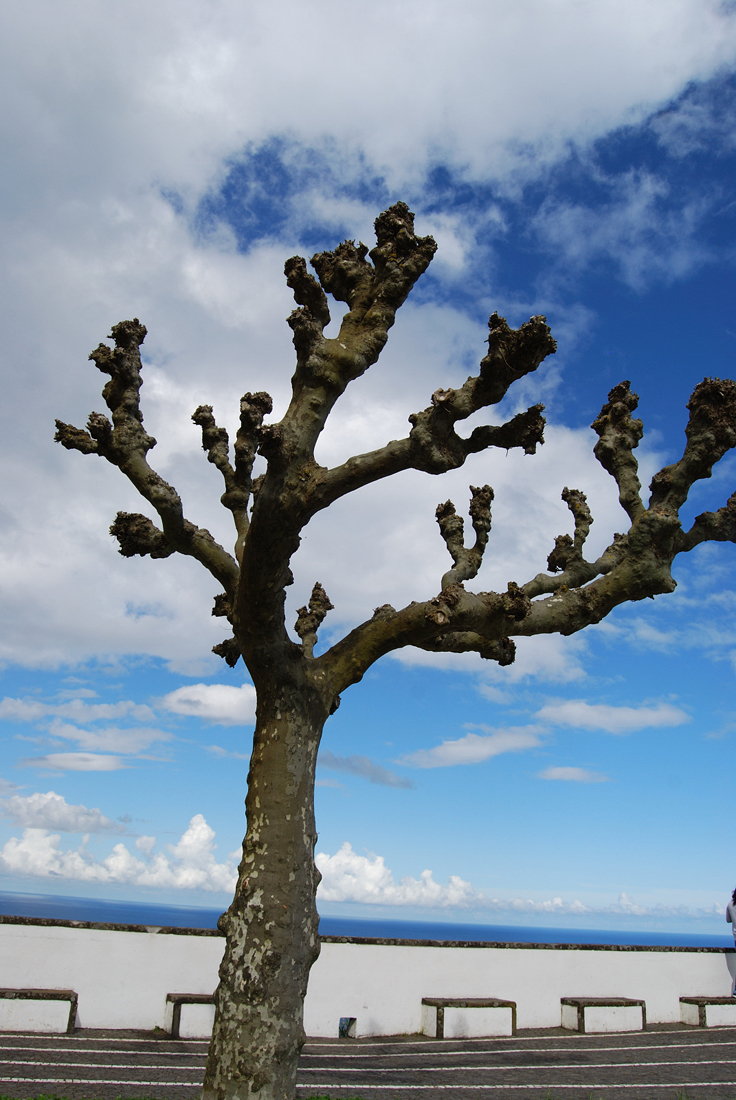
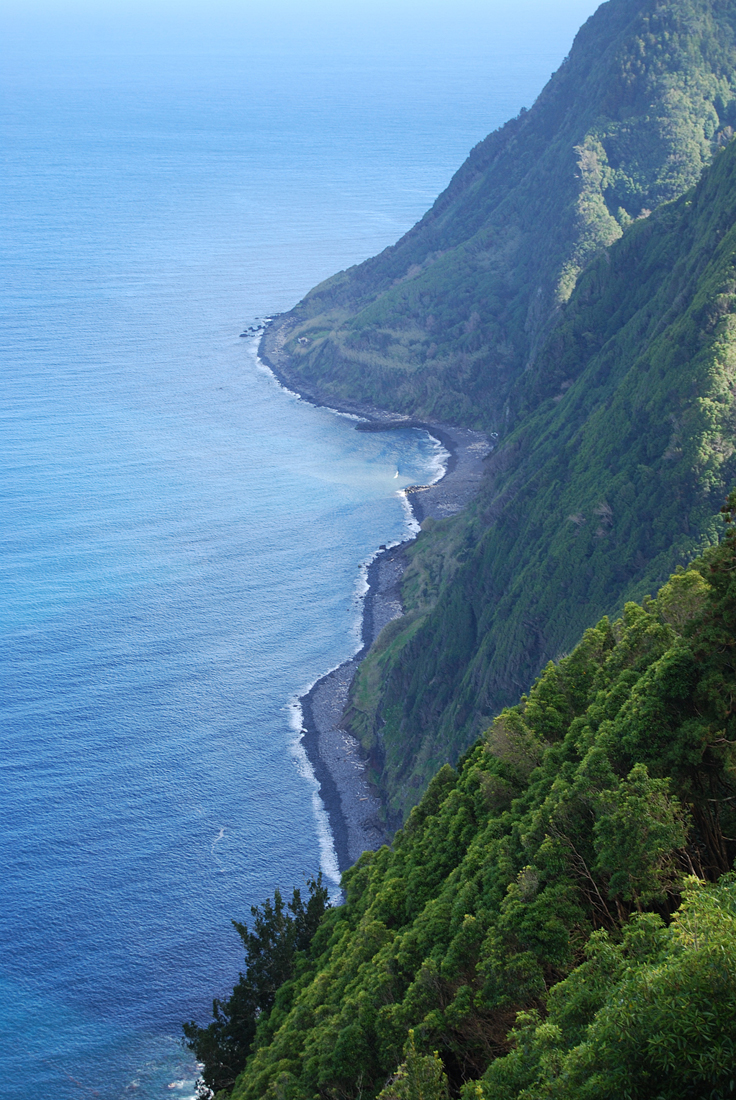
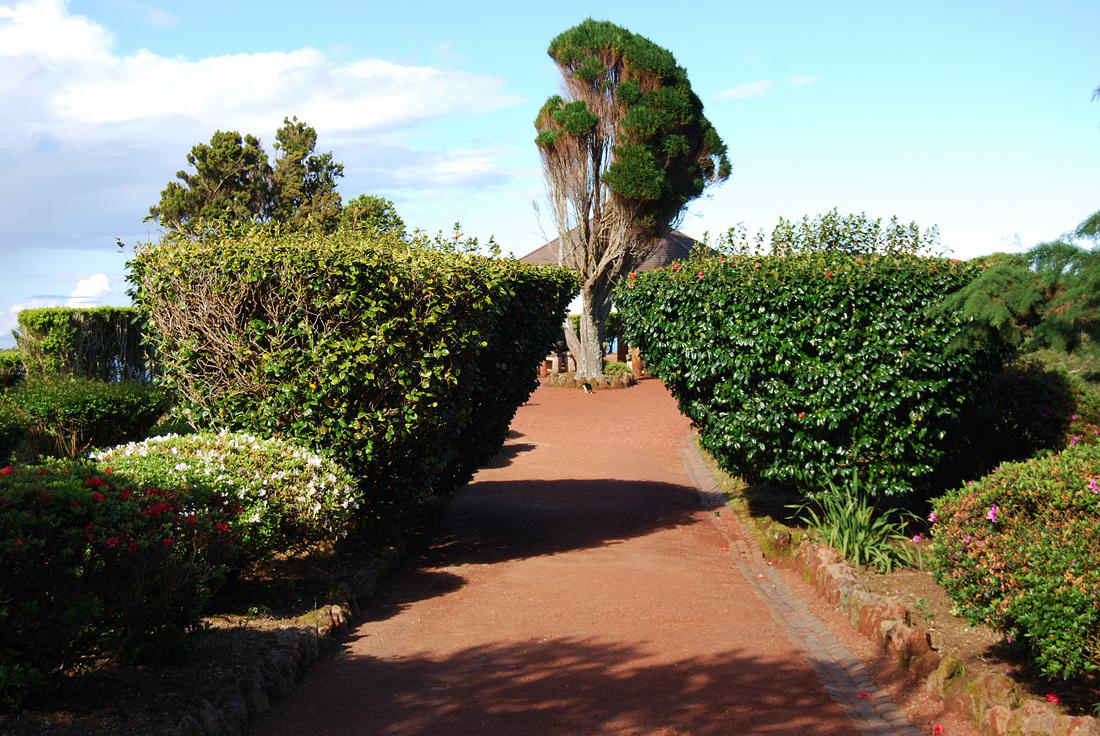
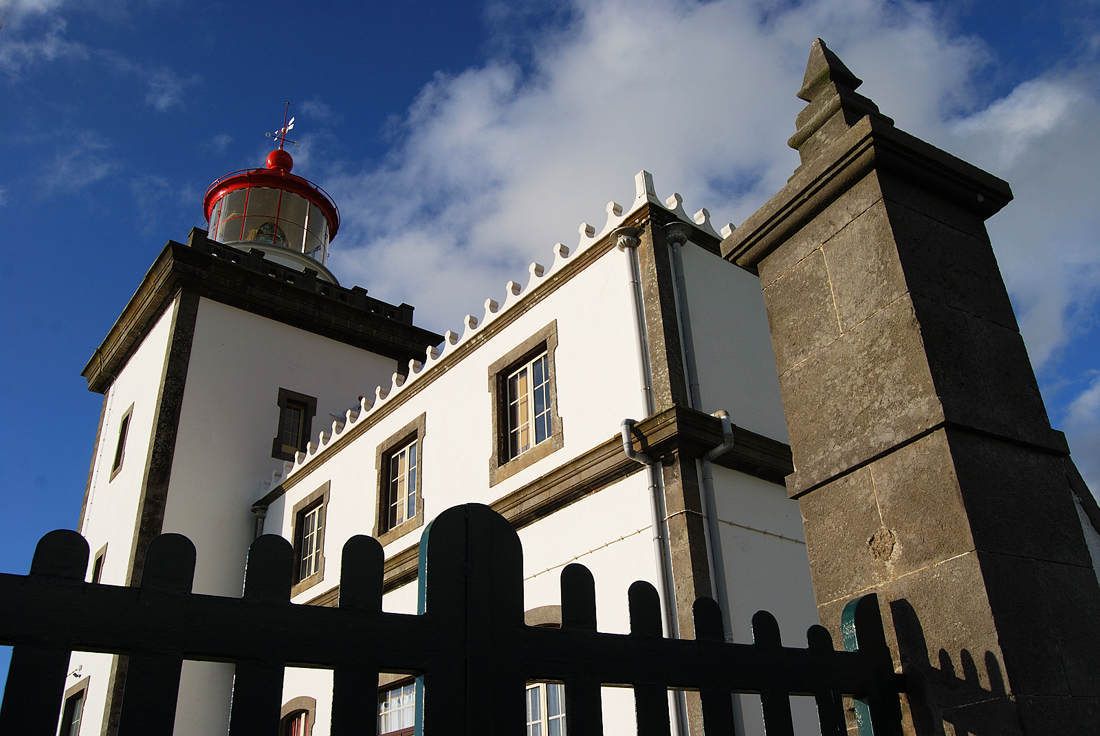
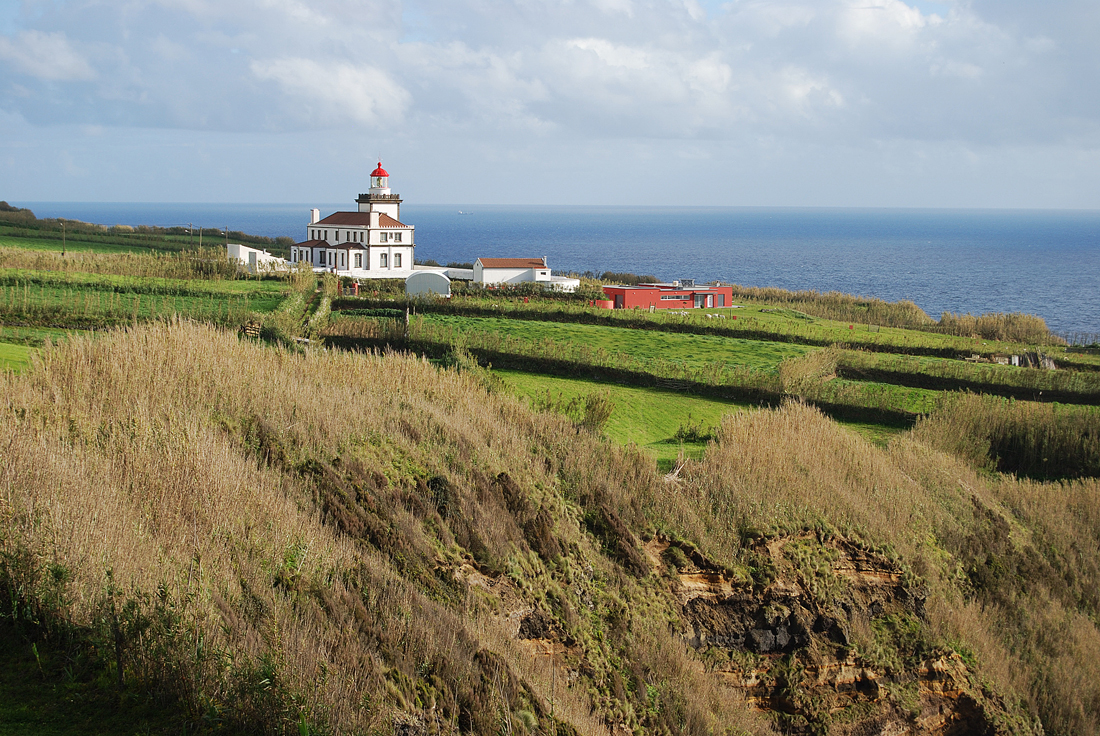
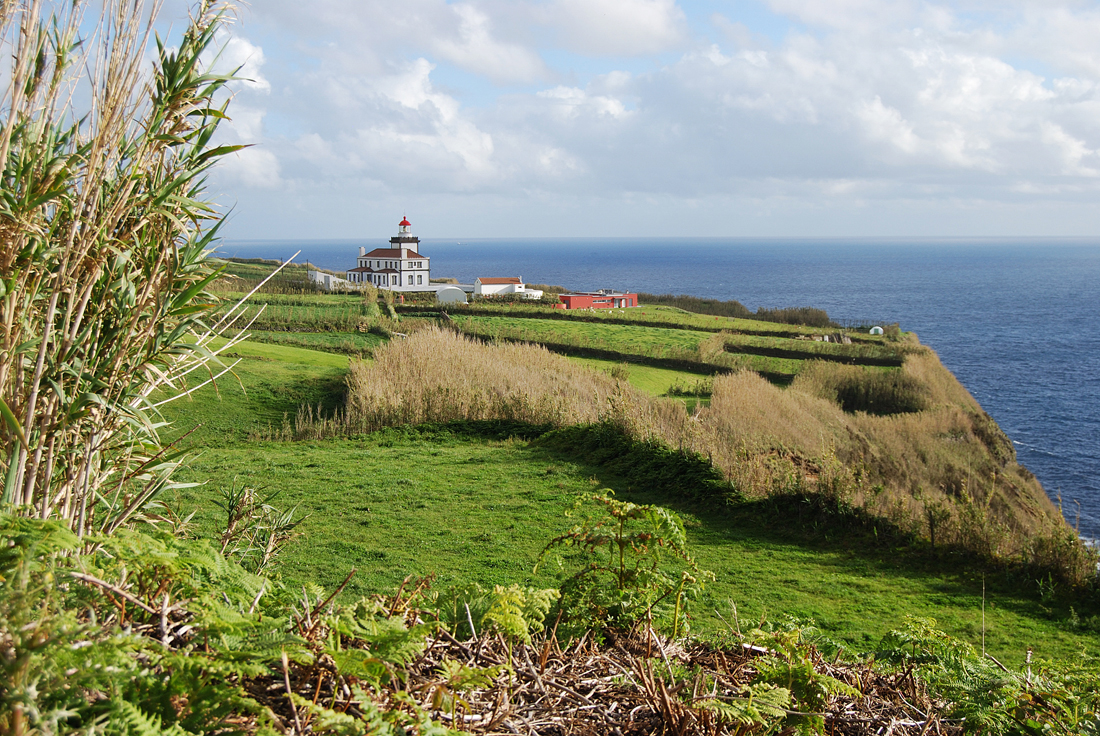
Nordeste was a quieter region, with less activity than other parts of São Miguel. It also had the oldest lighthouse in the Azores. The gardens offered stunning cliffside views, especially from Ponta do Sossego and Ponta da Madrugada.
View Gallery



Southern flank of São Miguel
Furnas, Lagoa, São Roque, Ponta Delgada
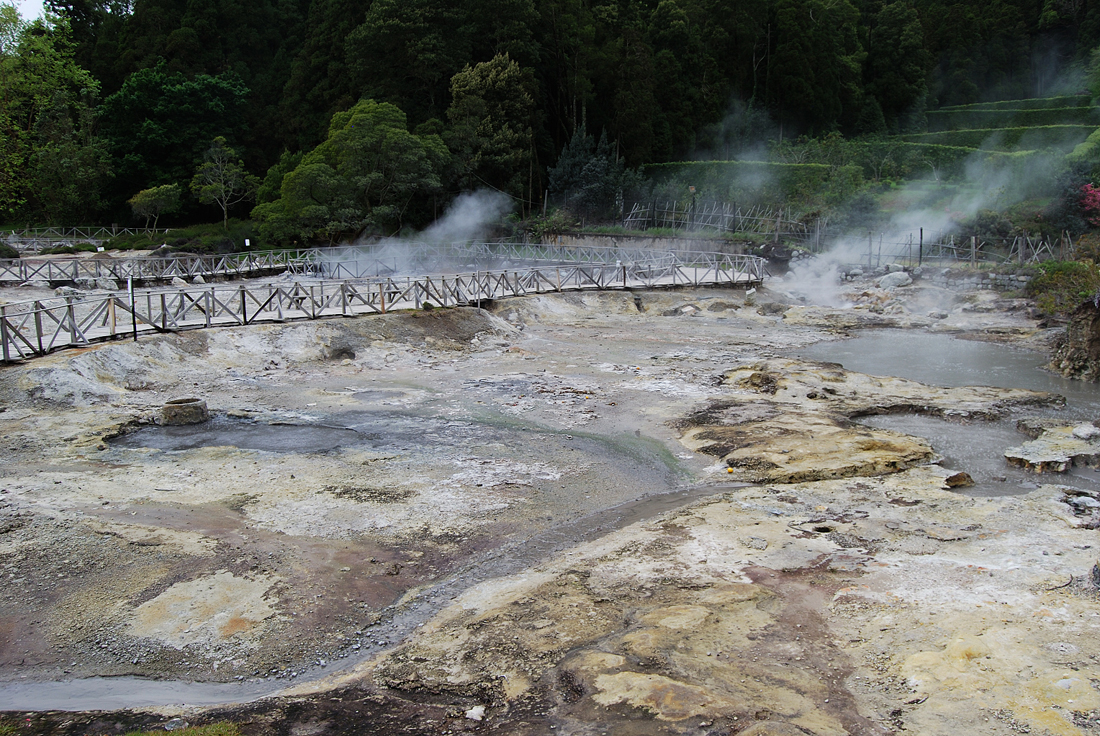
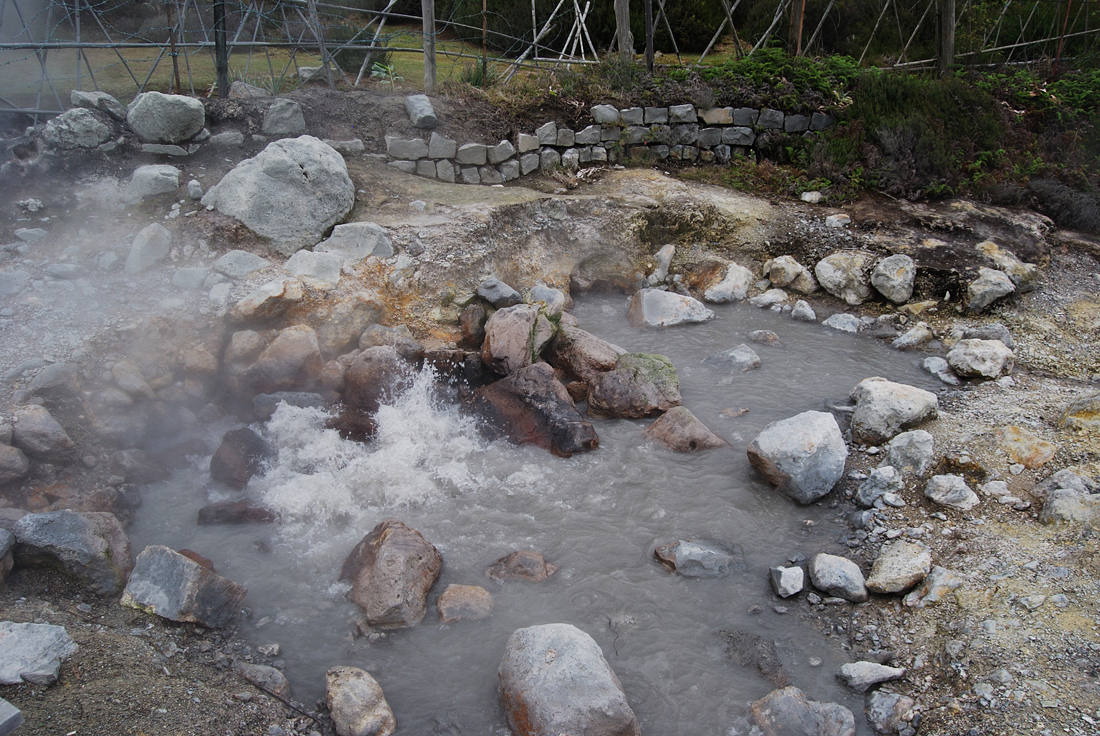
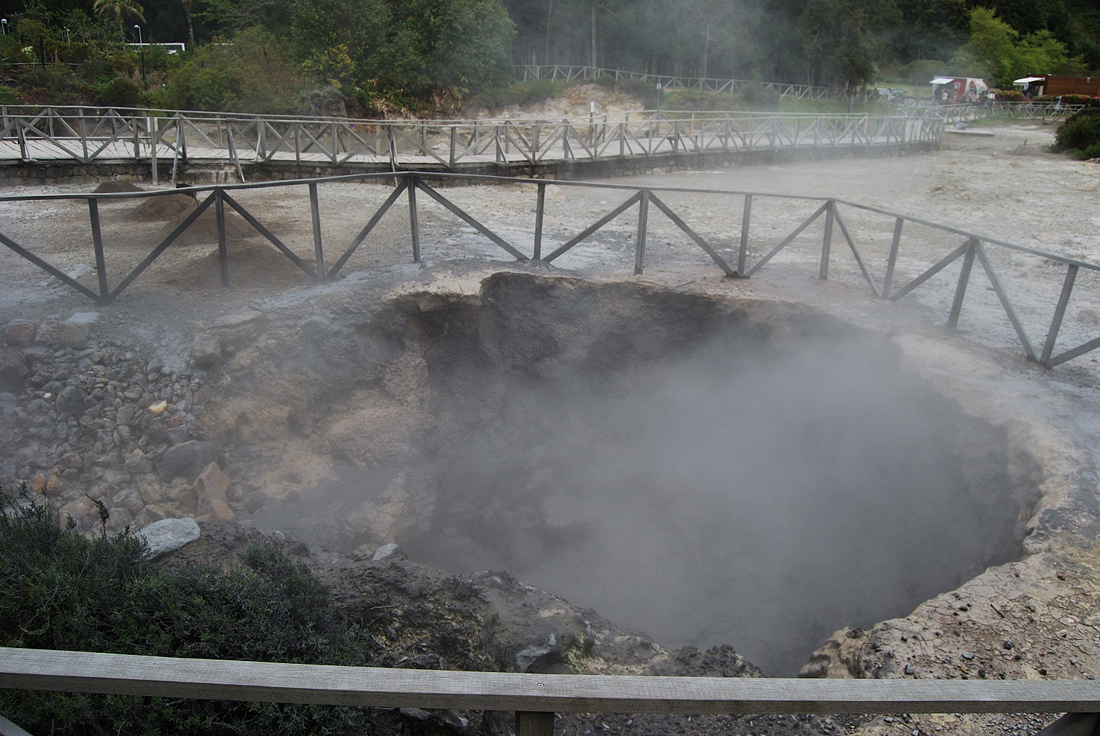
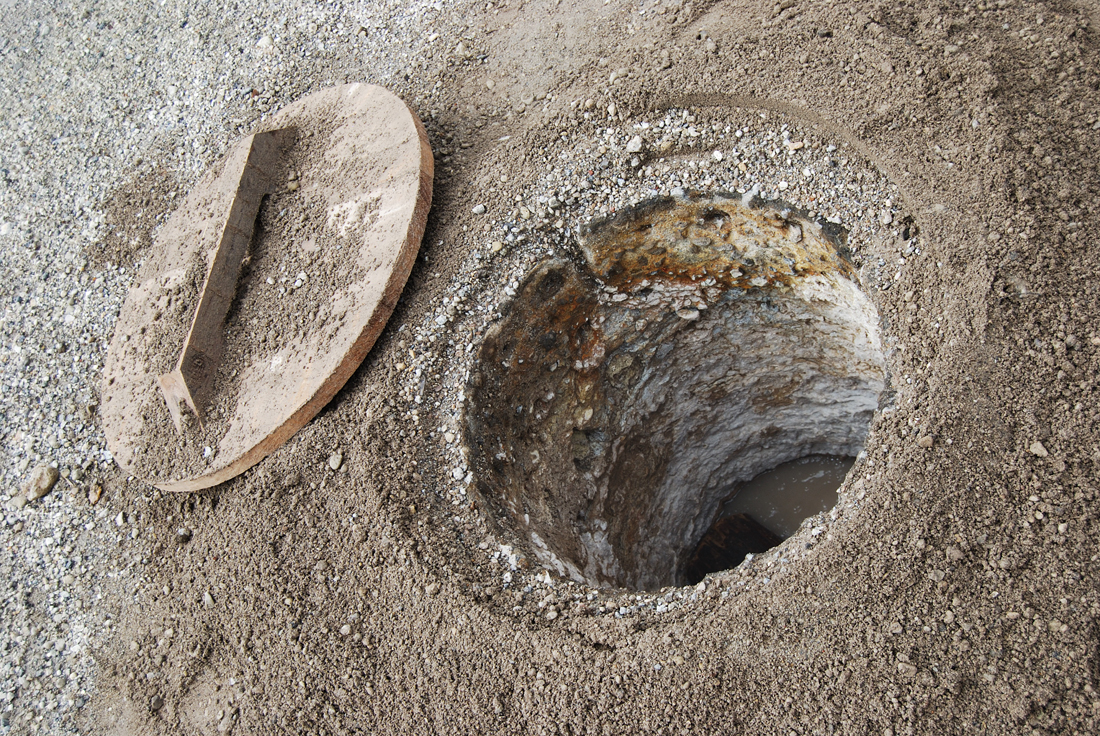
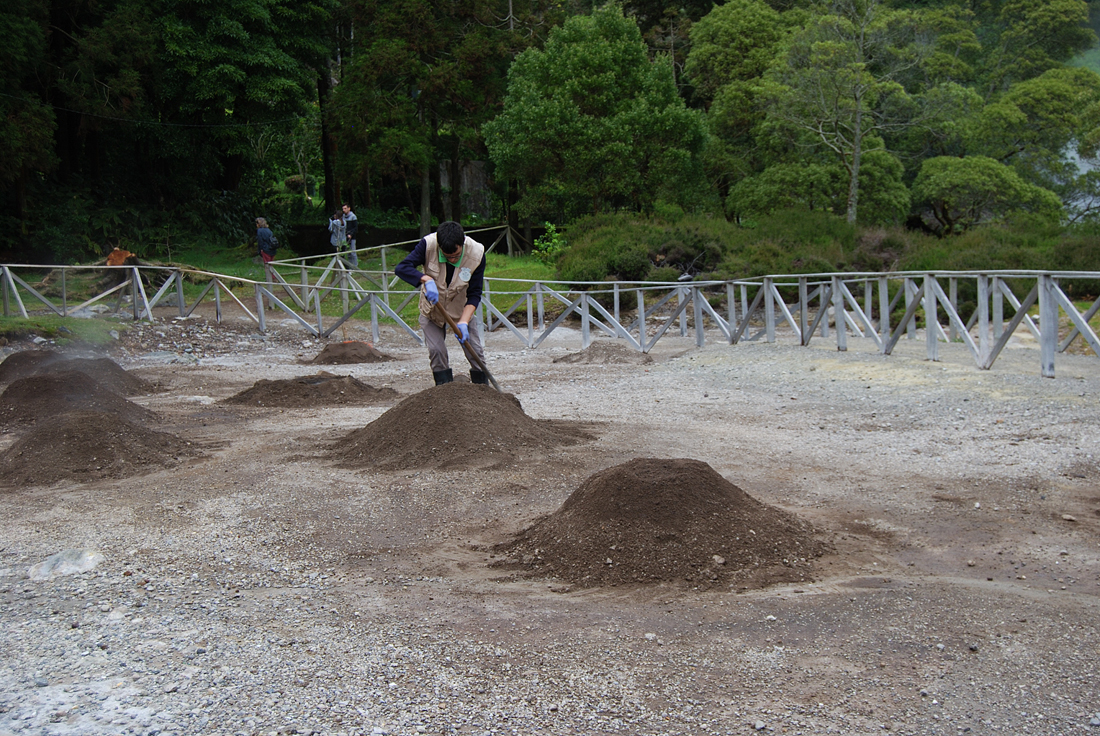
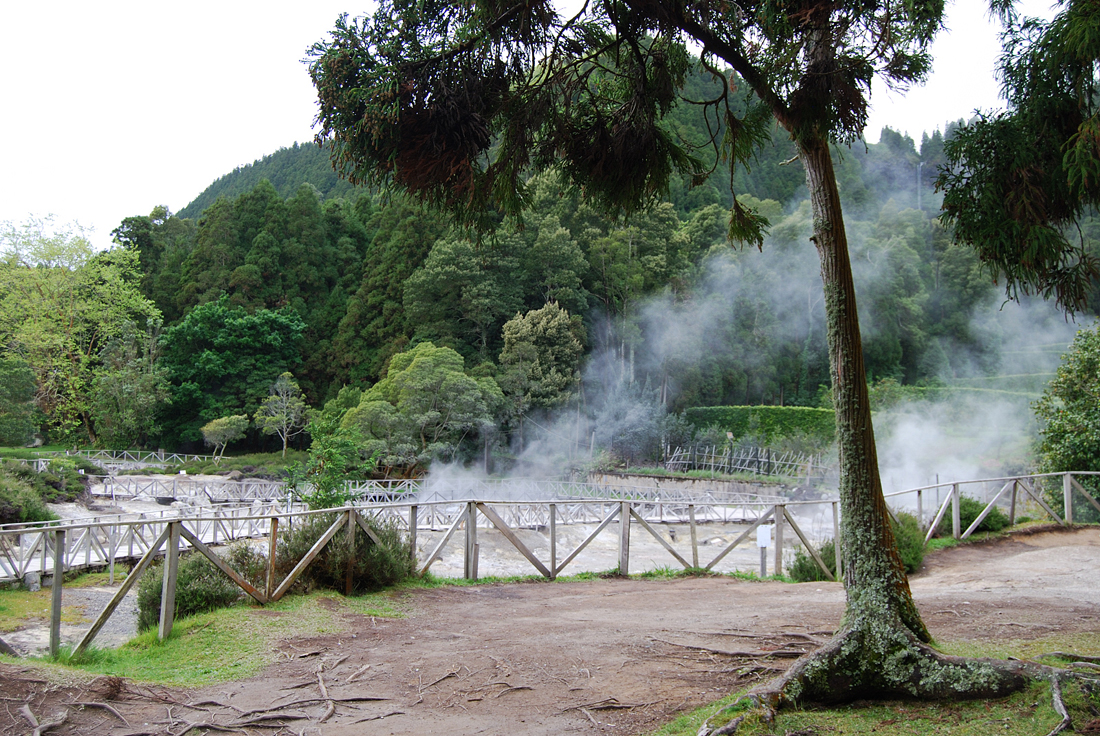
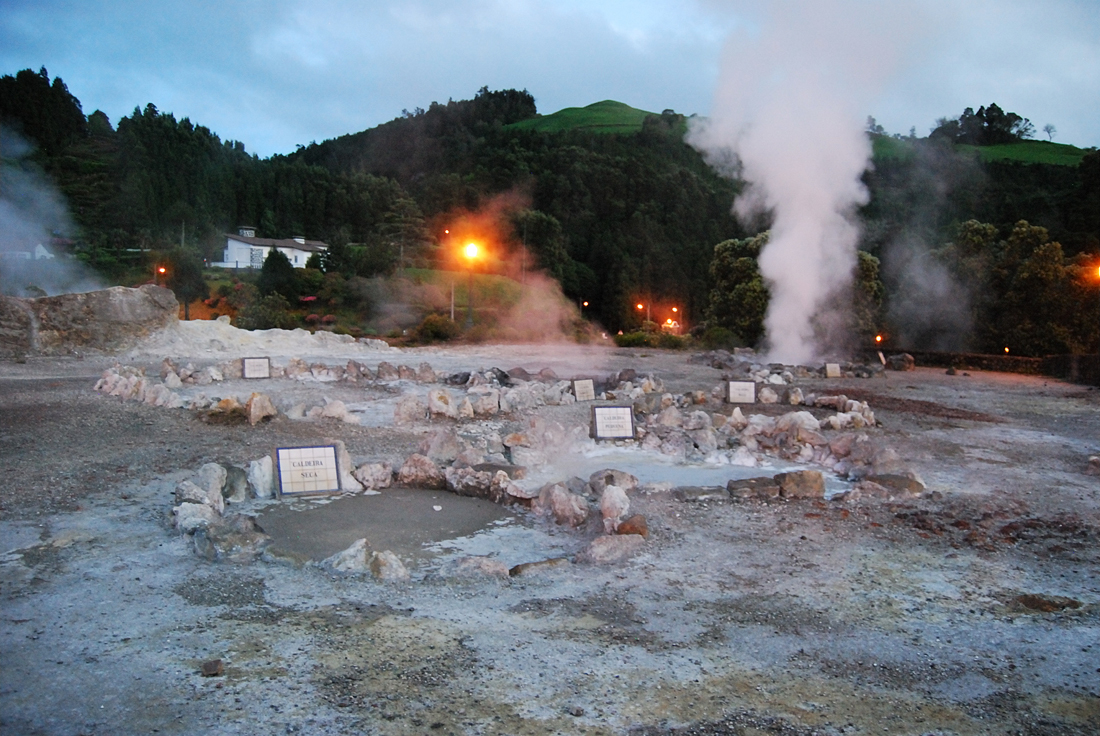
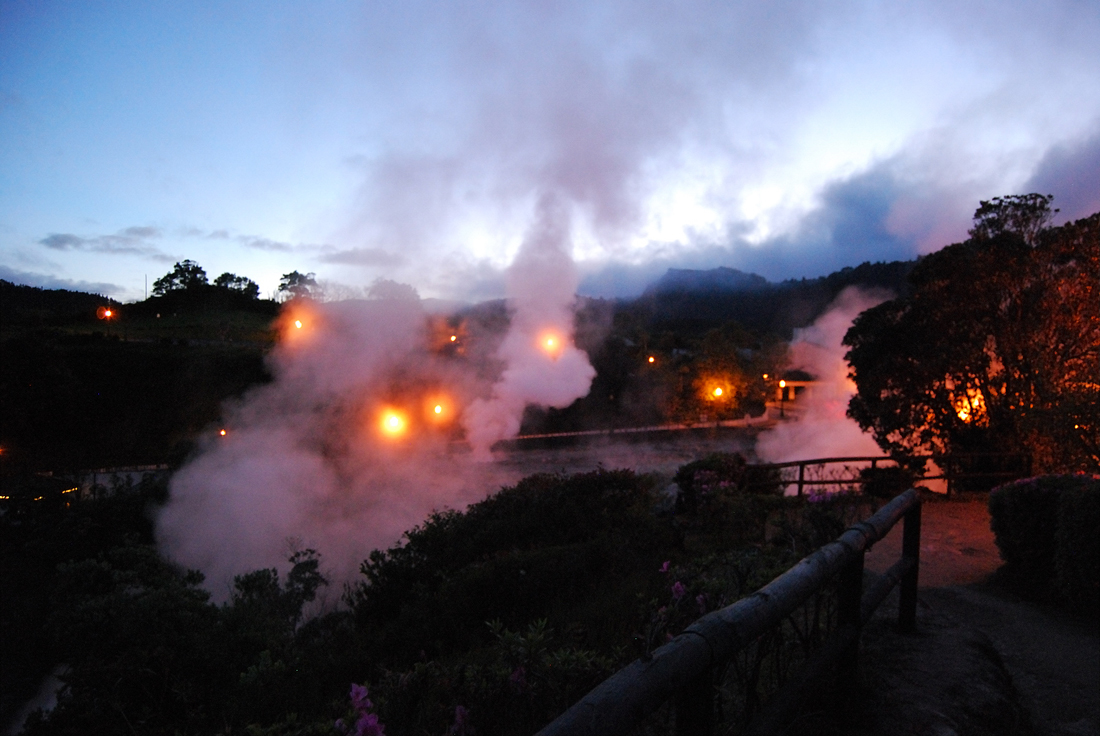
Part of the adventure in traveling isn’t just sightseeing, but also trying the different cuisines, including the way food is cooked in other cultures. 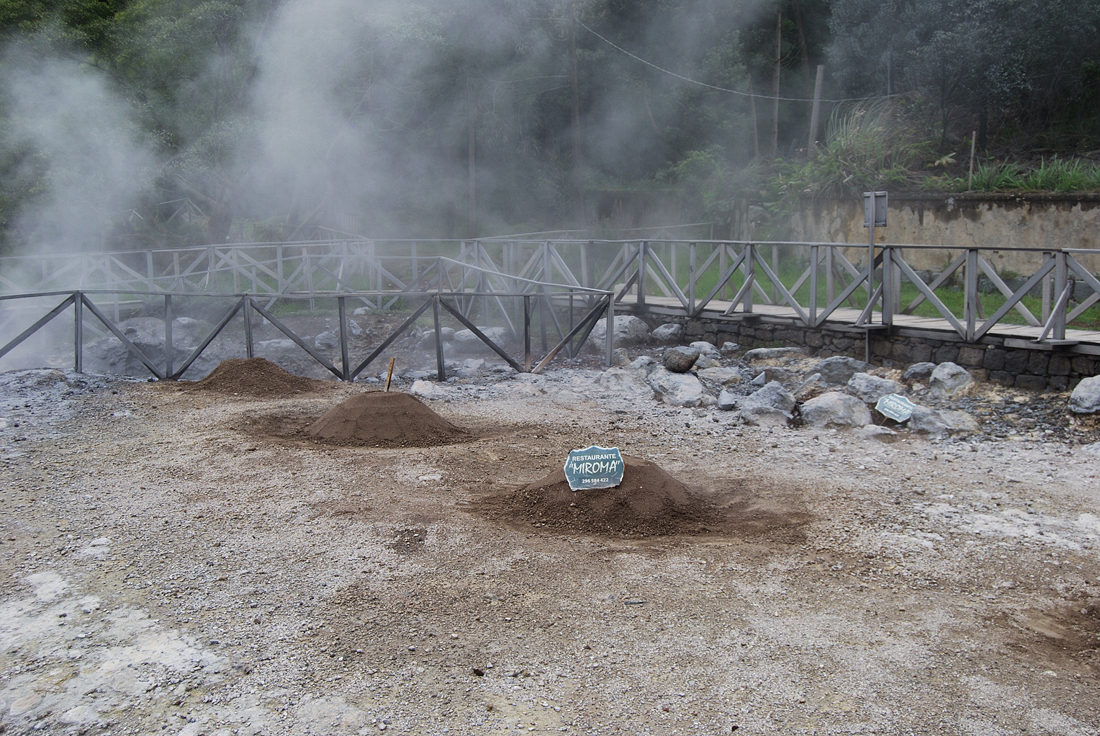 Here in Furnas, where the smell of sulfur was pungent, I observed cooking pots being lowered into the underground ovens heated by the hot springs (“caldeira” in Portuguese).
  This was the special process of making the cozido das Furnas or Furnas stew, consisting of vegetables and meat. Once fully cooked, the pots were transported to the restaurants to be served to customers. The Miroma restaurant in Furnas served cozido das Furnas with a plate of white rice on the side. In Chinese culture, a classic dim sum recipe includes similar ingredients as the cozido, except the food is held together with sticky rice and bundled in lotus leaves, then steamed in a wok.
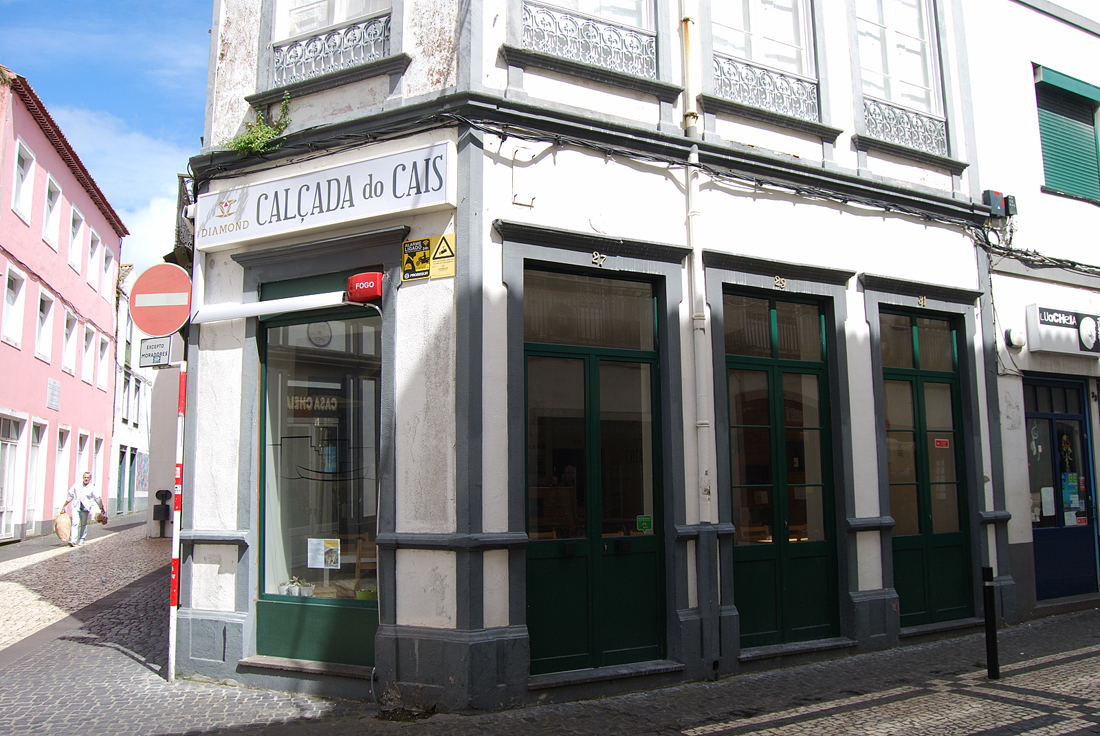
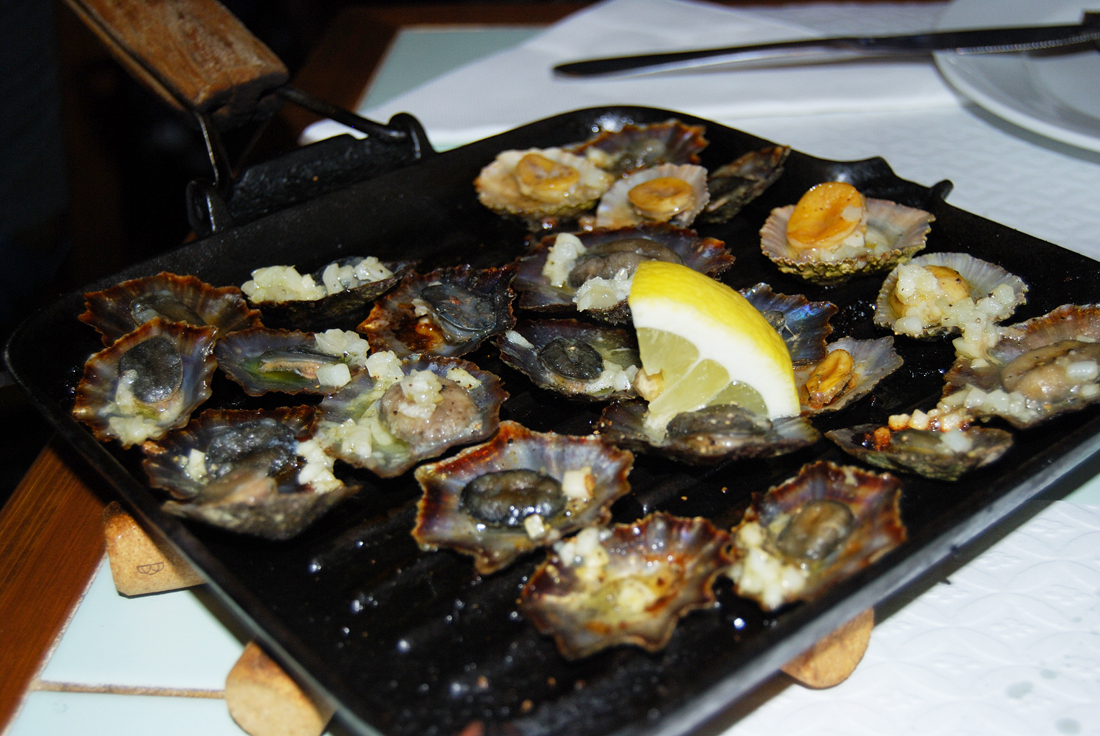
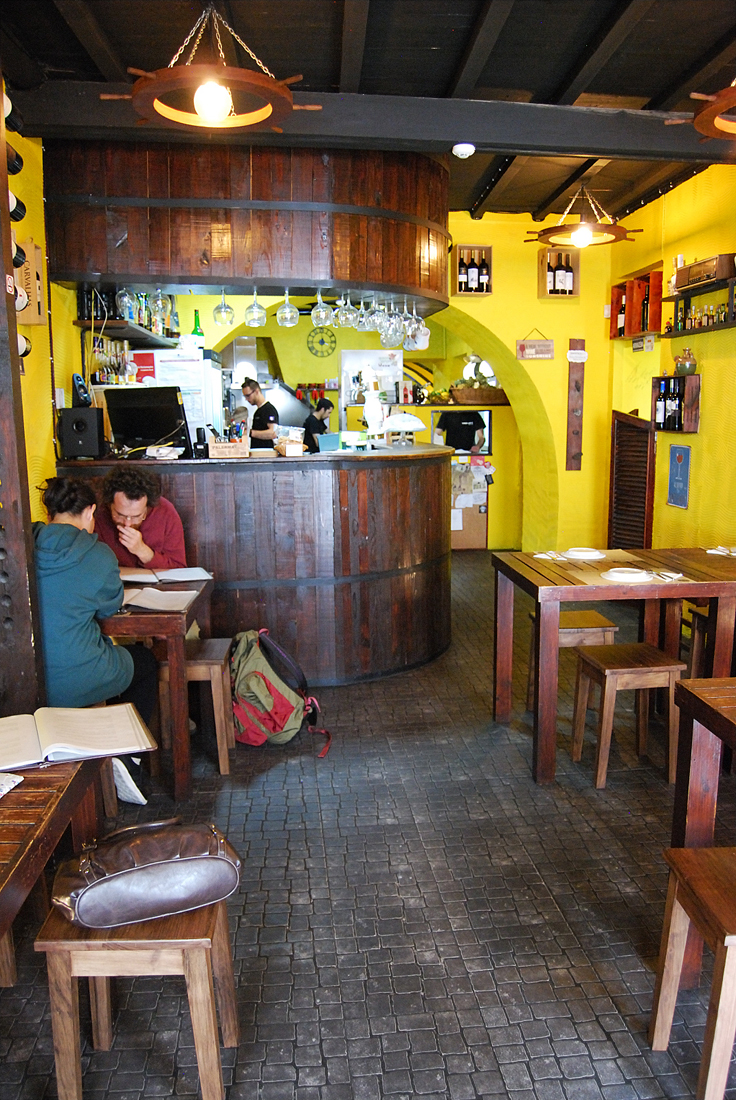
Some other delicacies included barnacles and limpets, which appeared on menus in several popular restaurants in São Miguel. Restaurants we enjoyed were Tasca, Calcada do Cais, Miroma, Cais 20, and Taberna 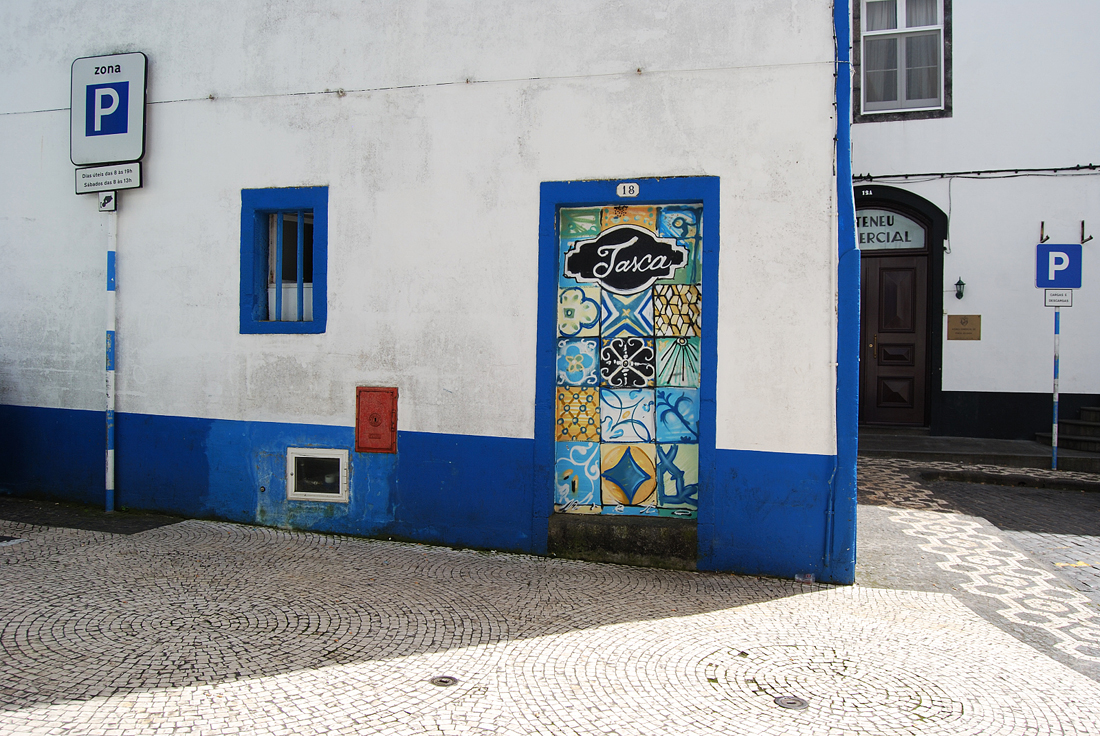 Acor. Many of the popular restaurants accepted reservations, so we often secured places to eat prior to leaving our hotel in the morning.
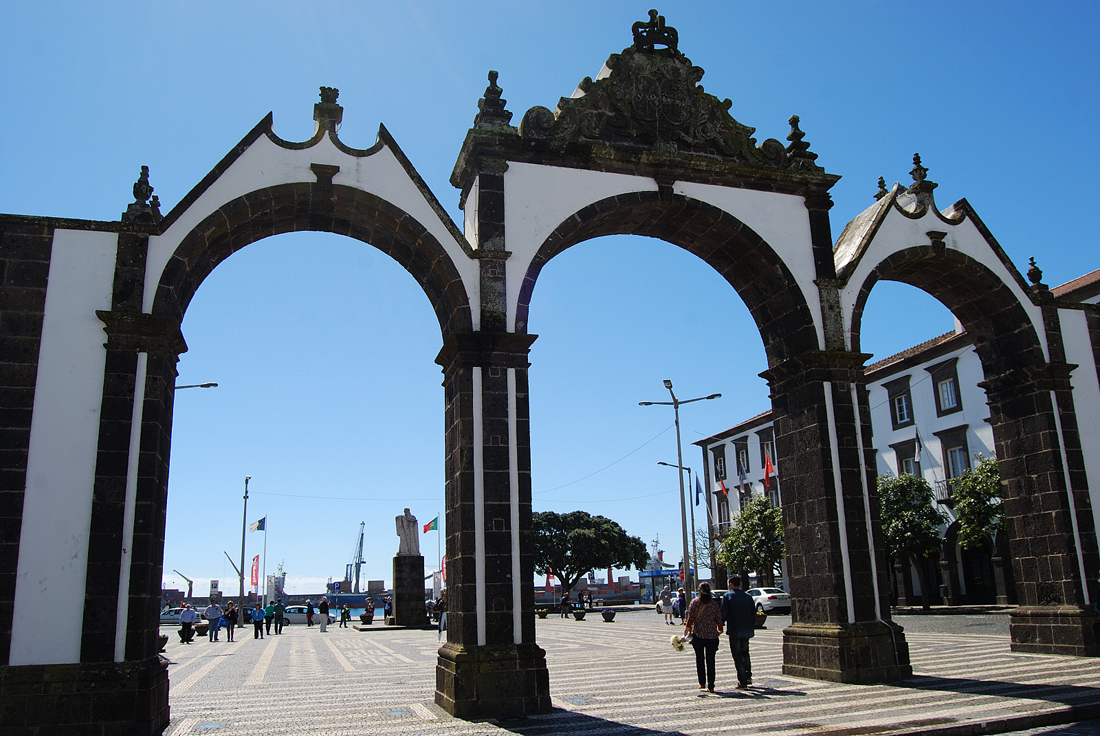
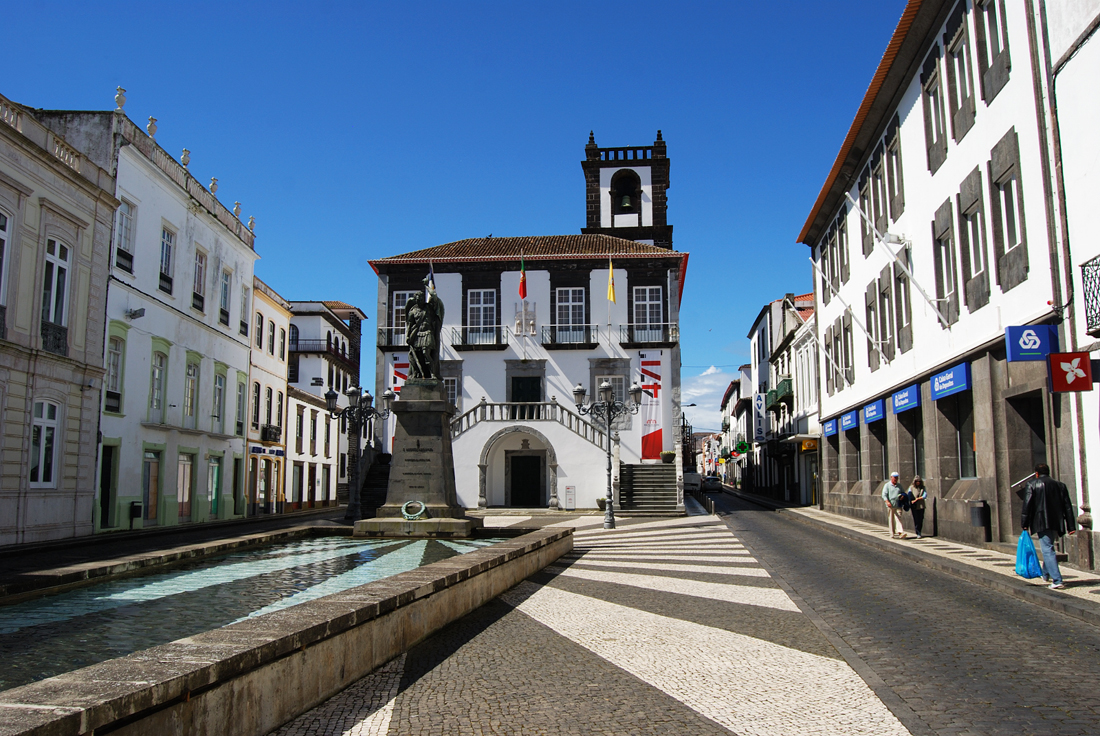
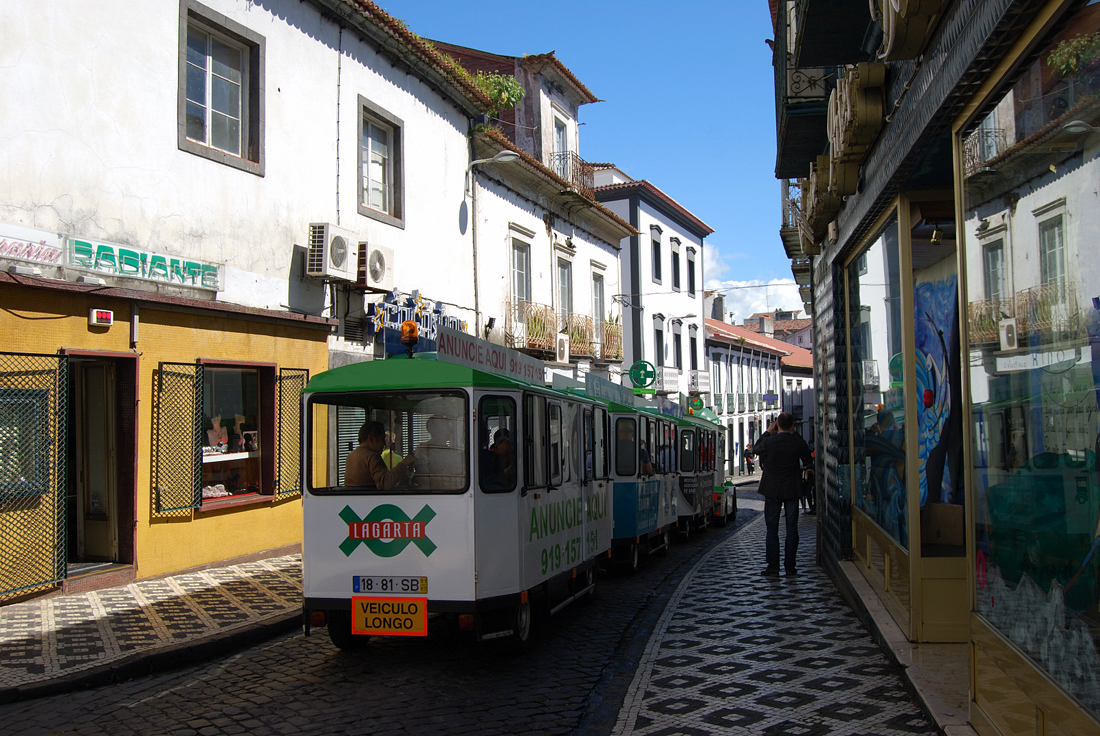
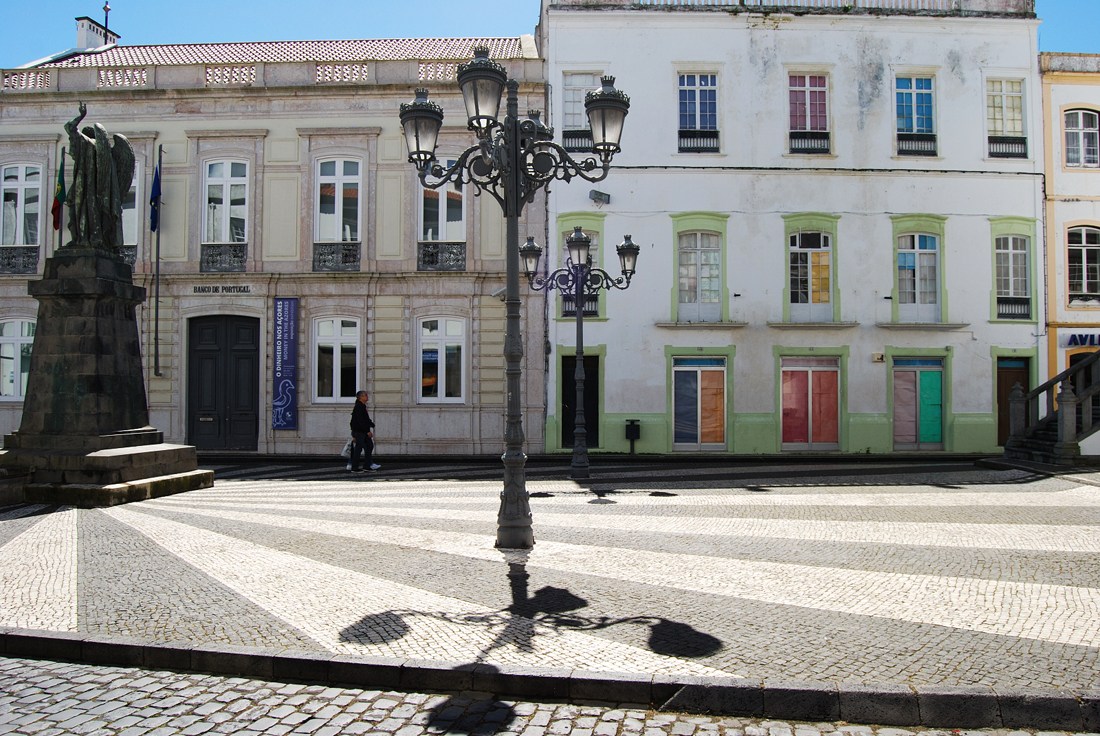
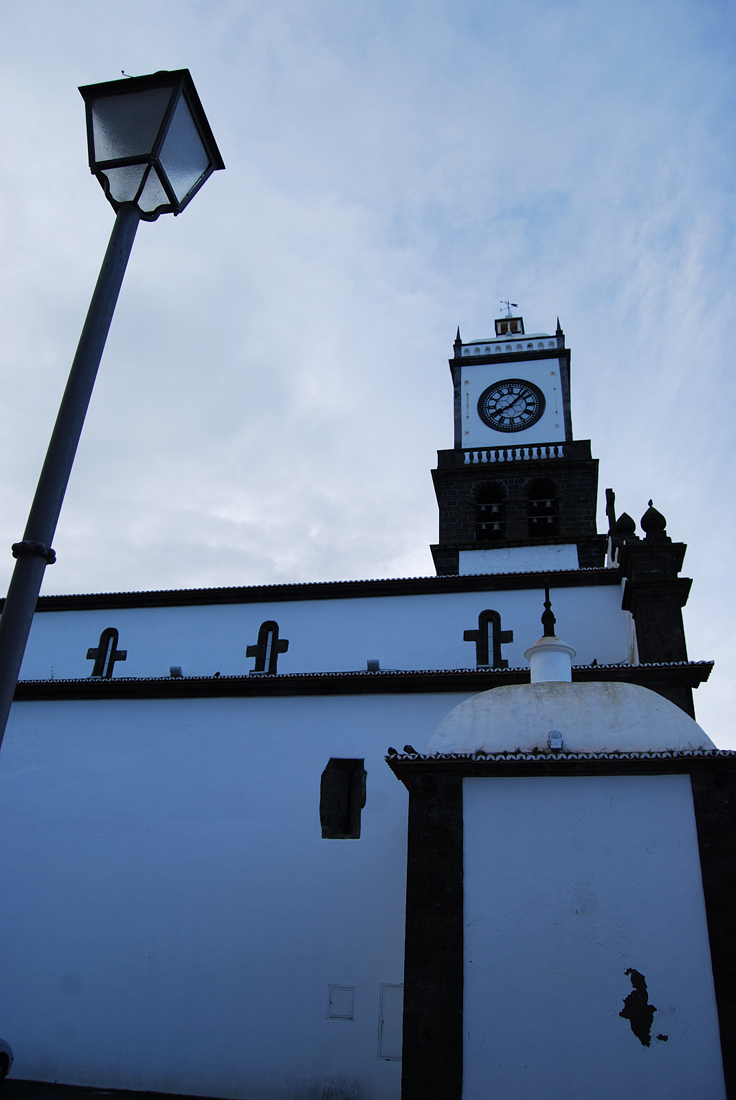
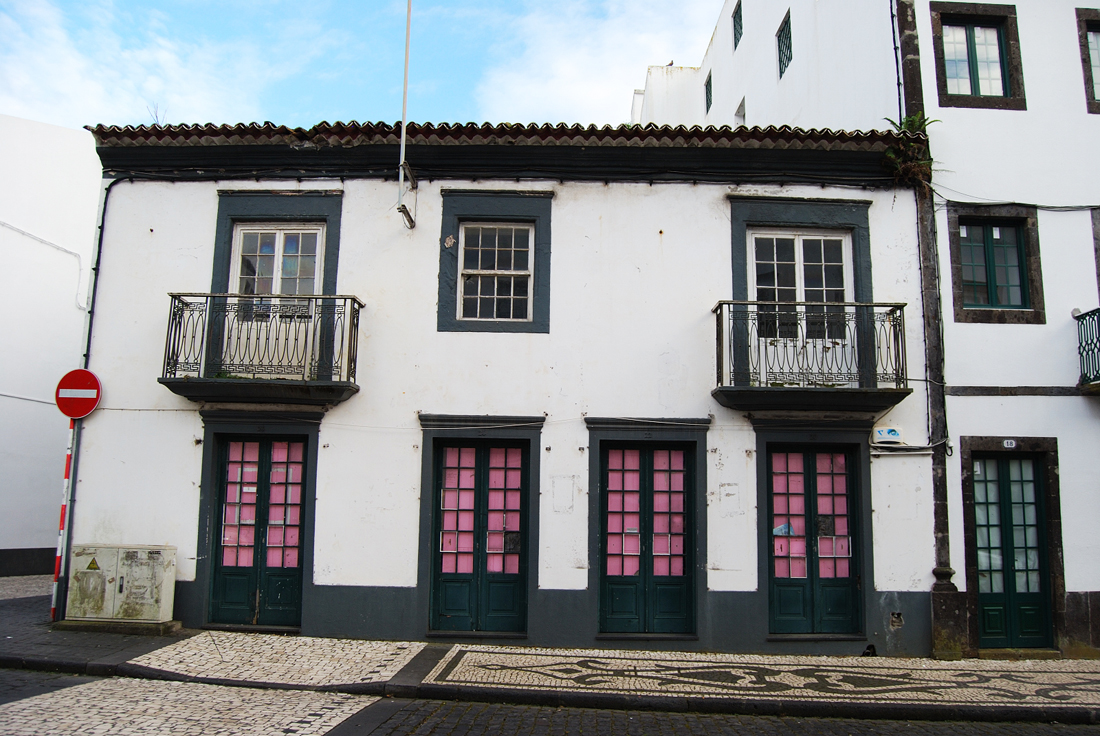
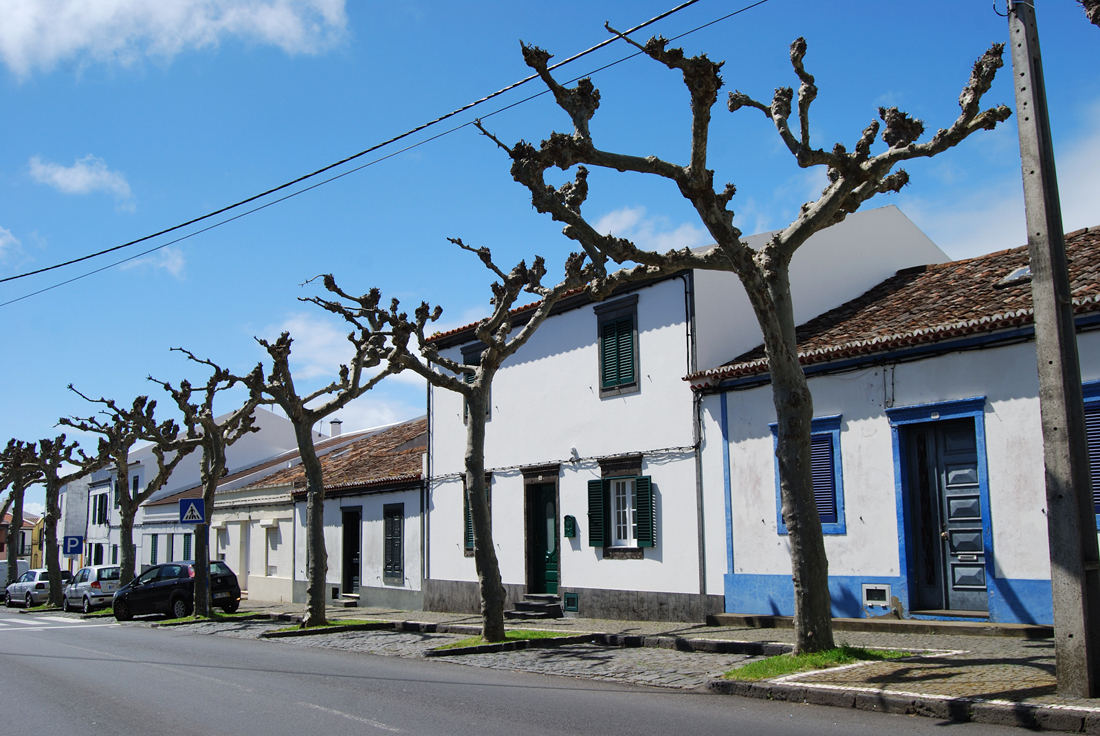
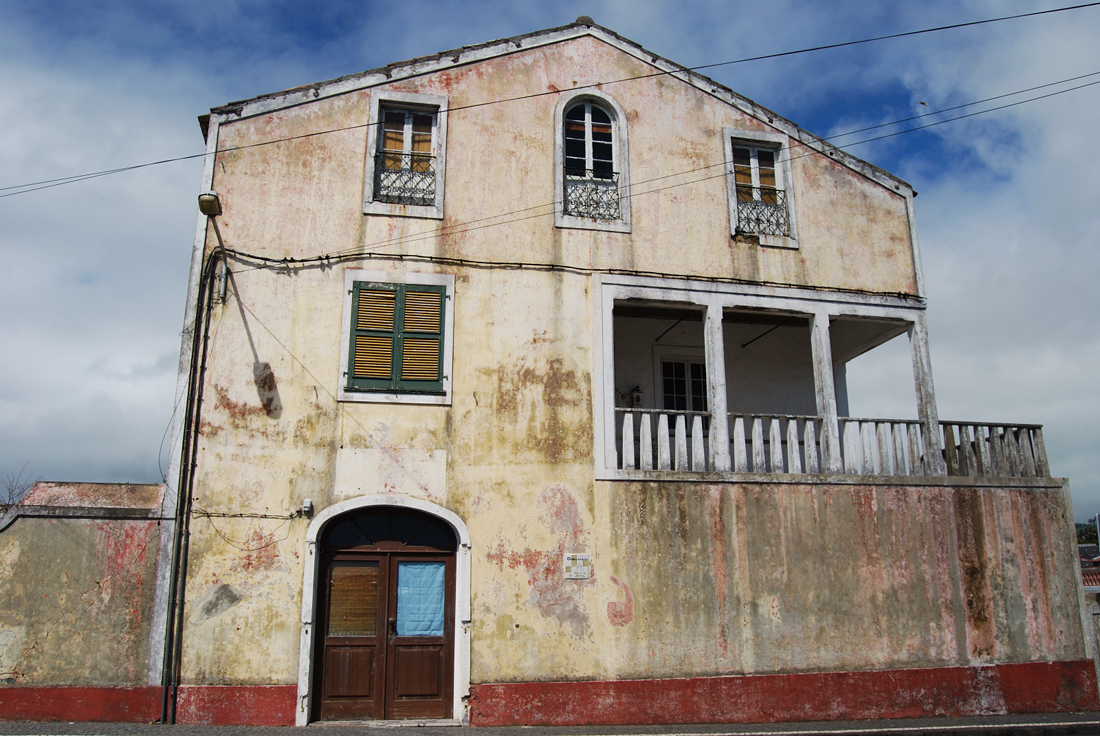
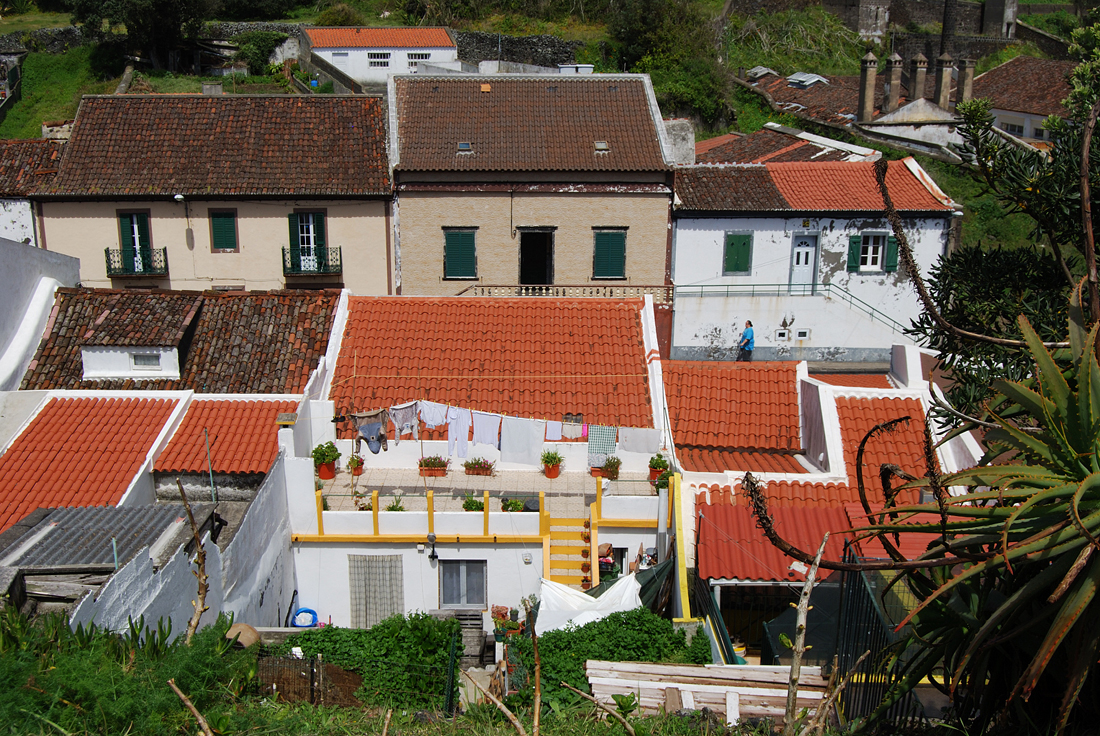
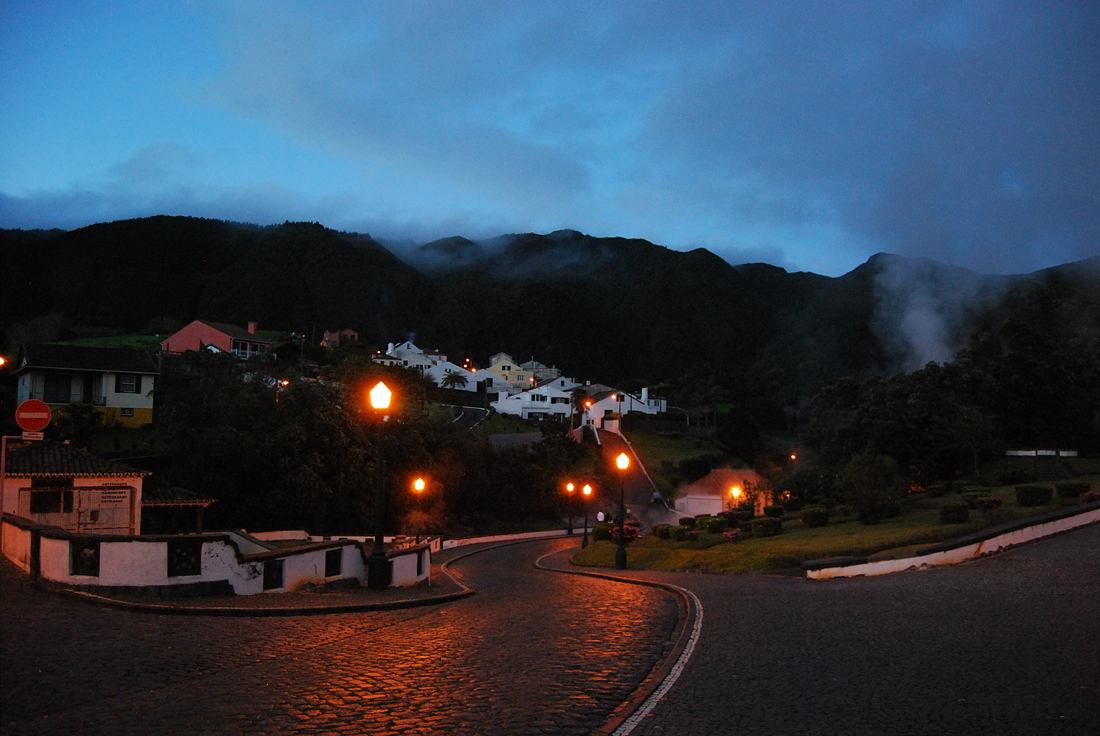
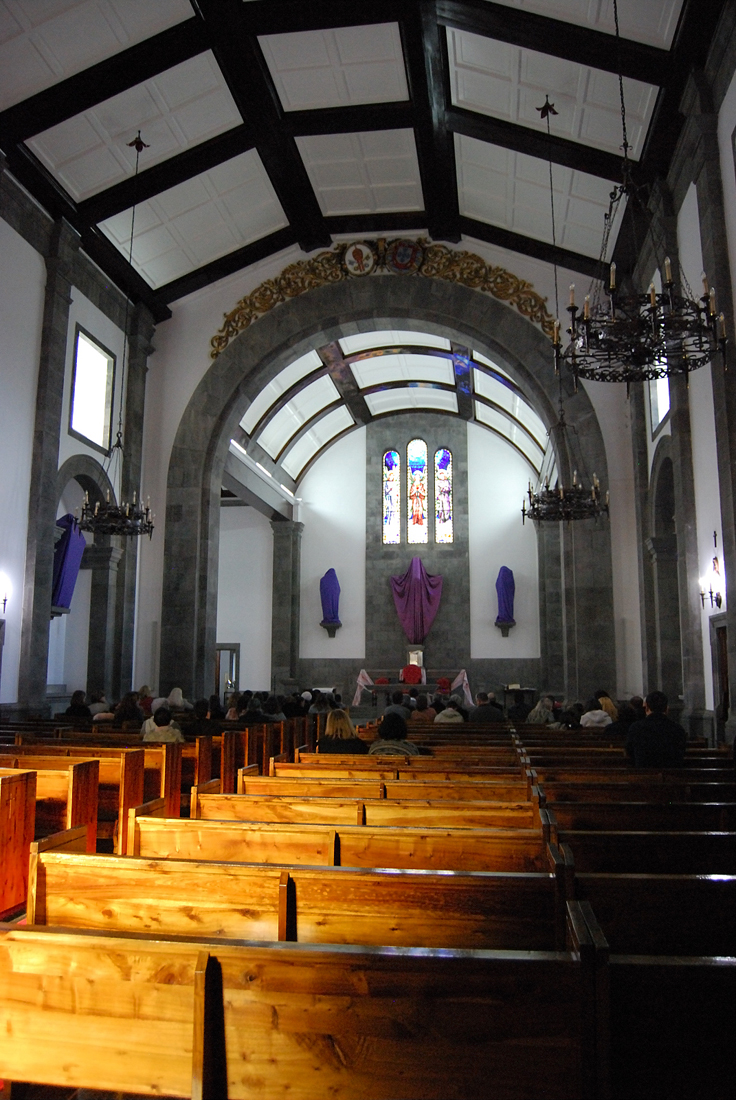
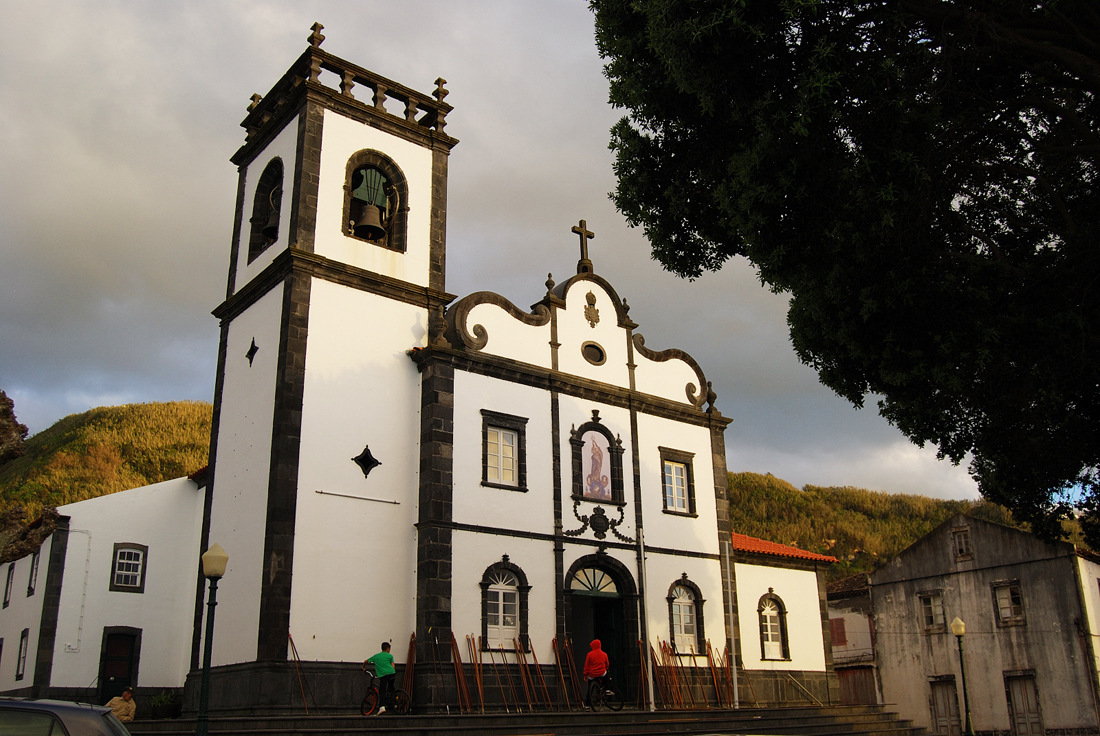
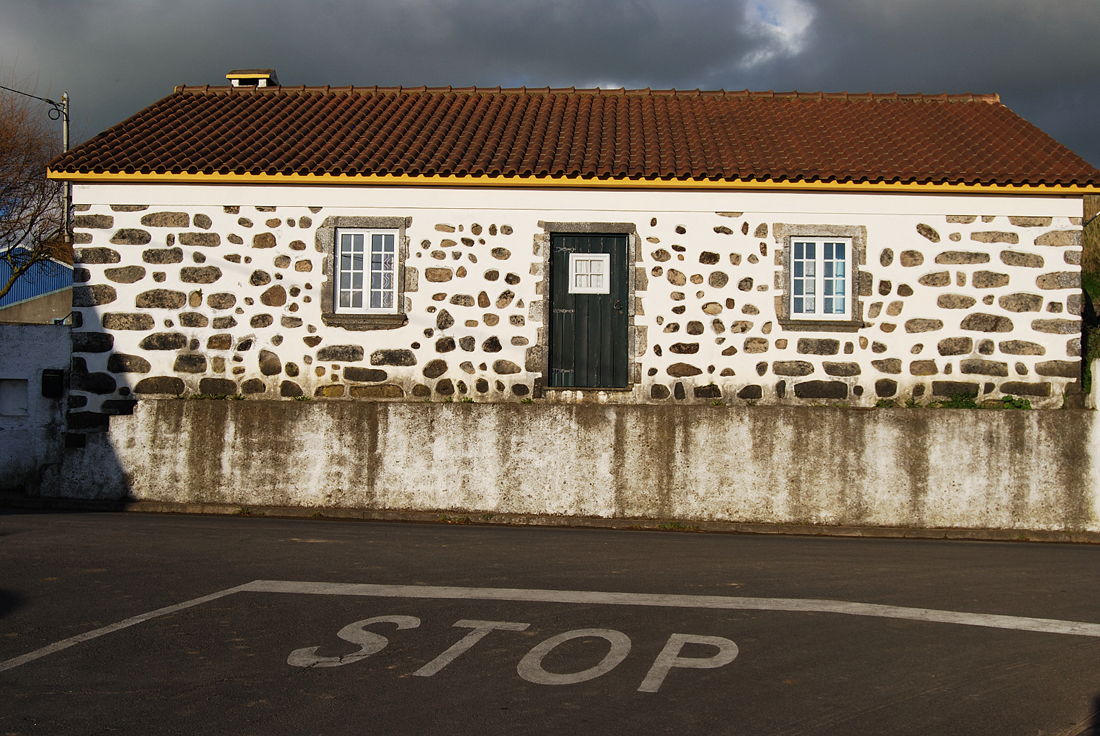
Just as there was diversity in dishes at São Miguel, there was also diversity in the rustic appearance of buildings and homes. The churches we visited on the island were more rustic inside than typical European churches we’ve seen. I was particularly impressed by the black-and-white sidewalk designs. Even our hotel room number was embedded in the floor beside the door as you stepped inside. The ground we walked on felt like a valuable art canvas in this culture.
View Gallery









Western flank of São Miguel
Sete Cidades, Lagoa das Empadadas, Ponta da Ferraria, Mosteiros
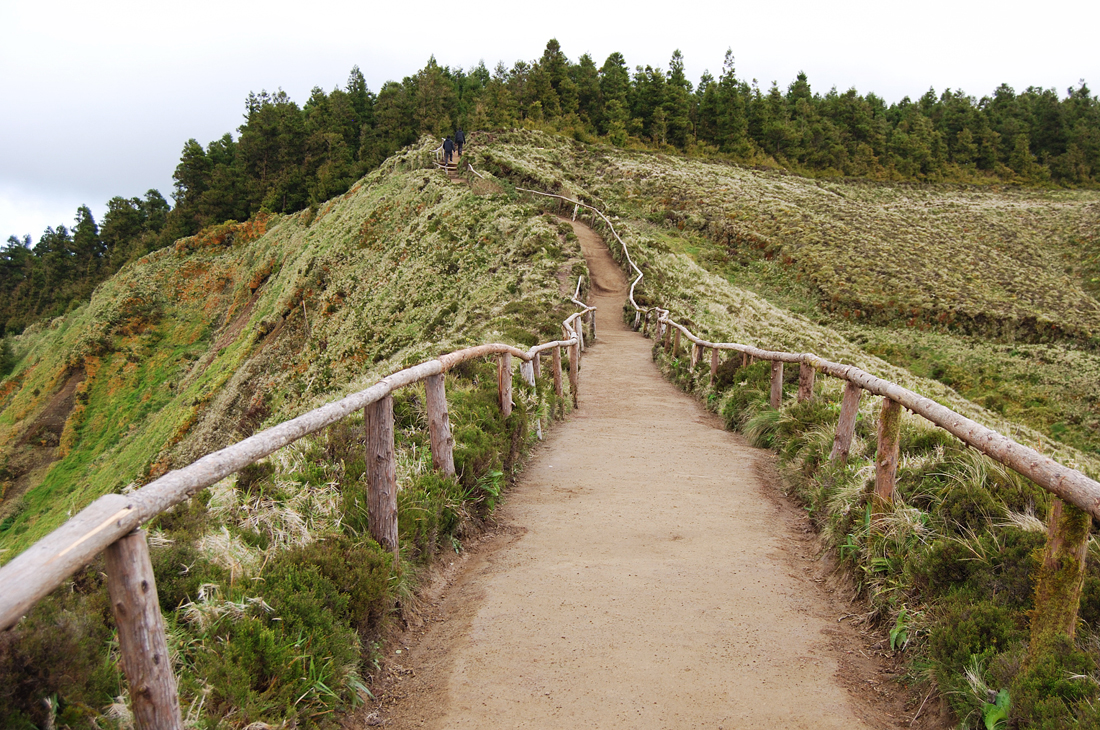
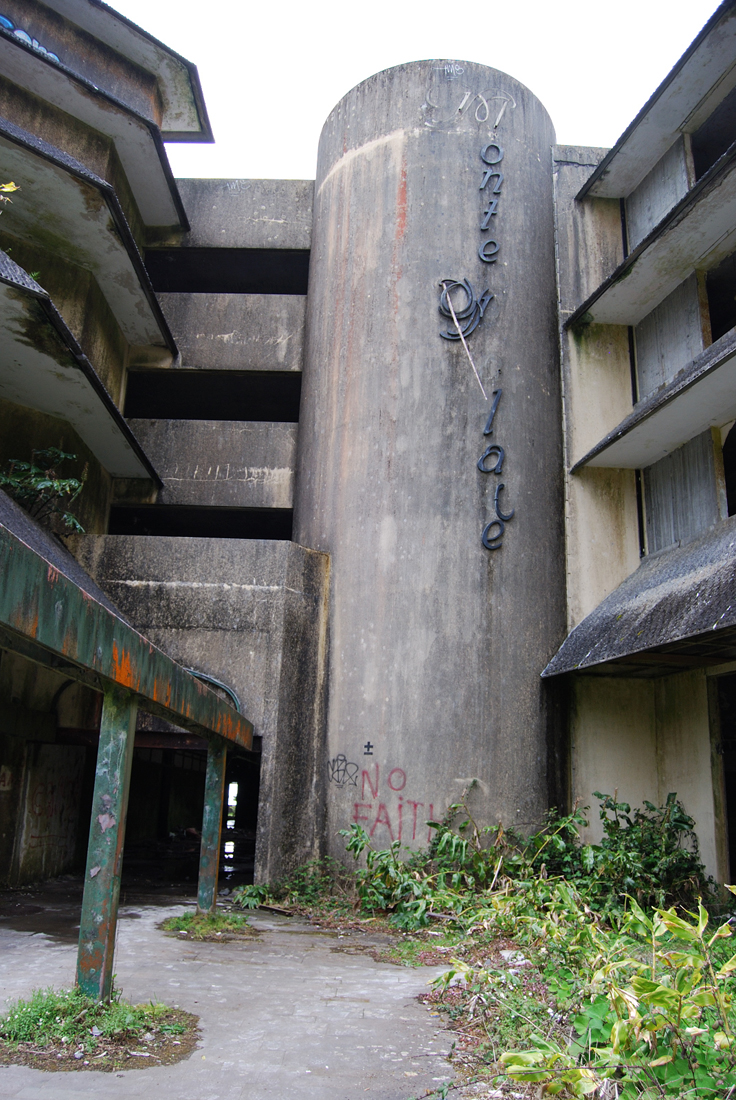
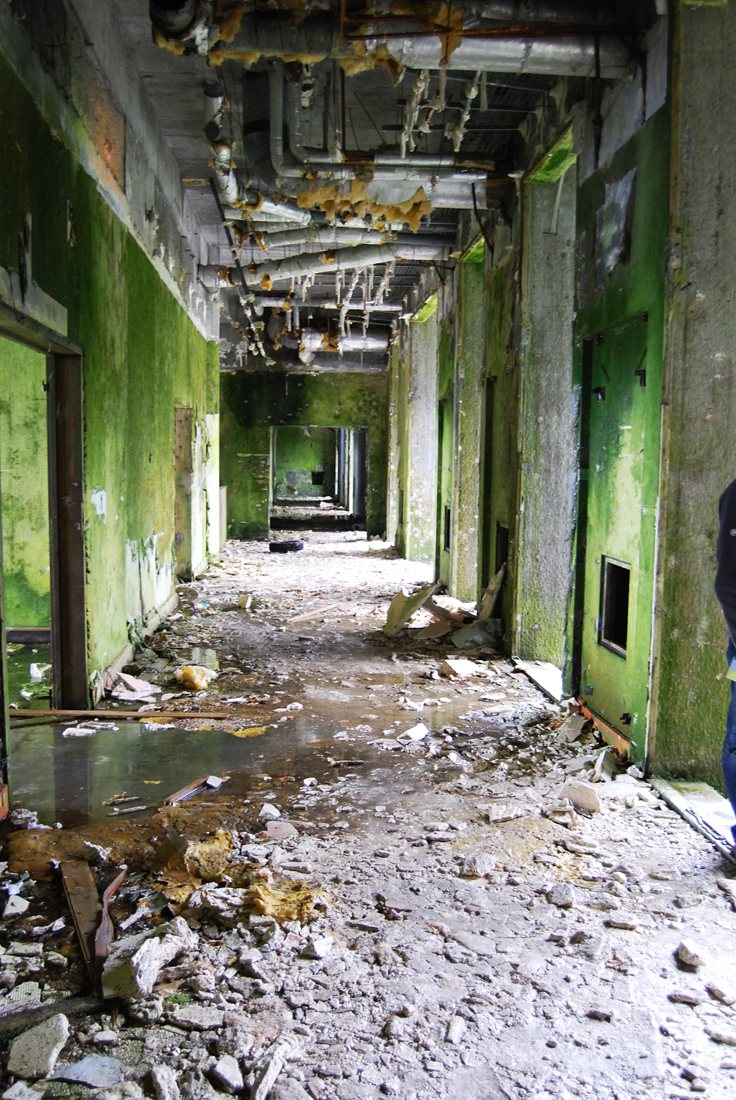
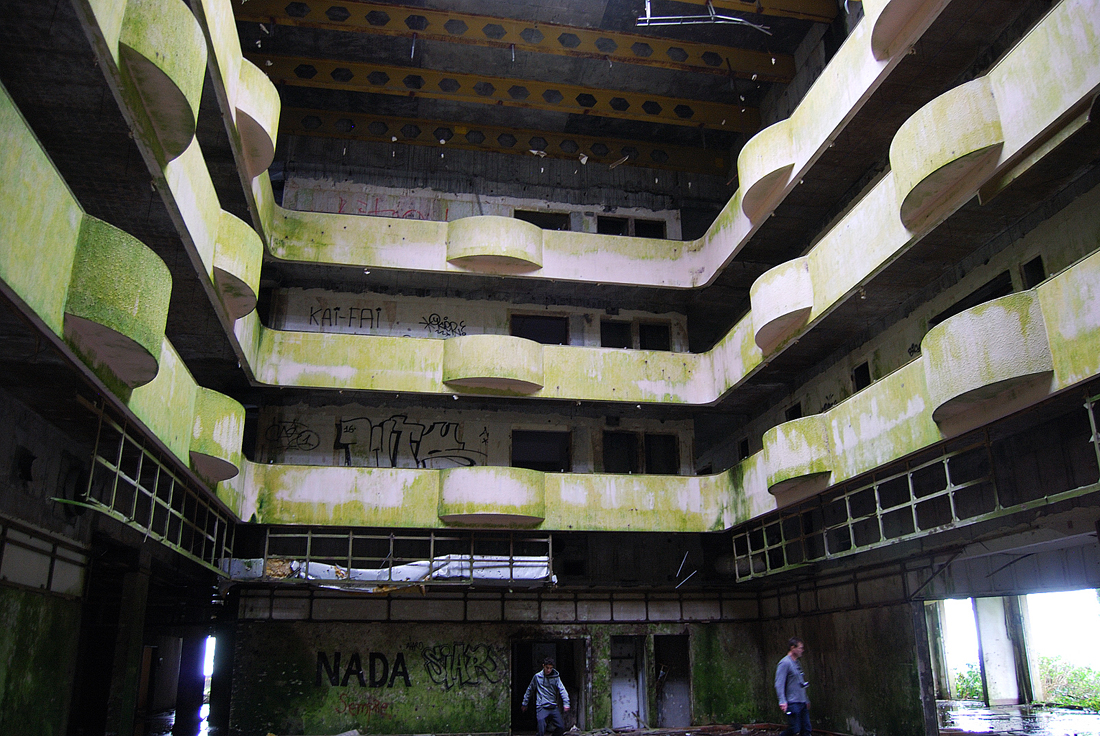
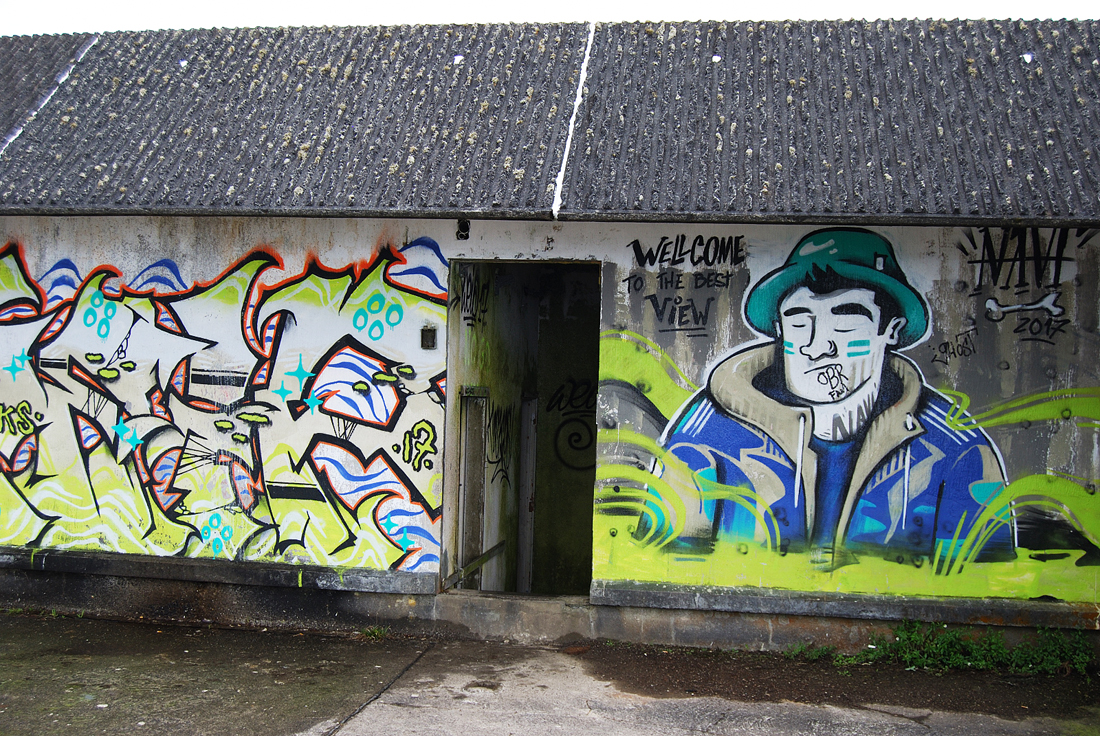
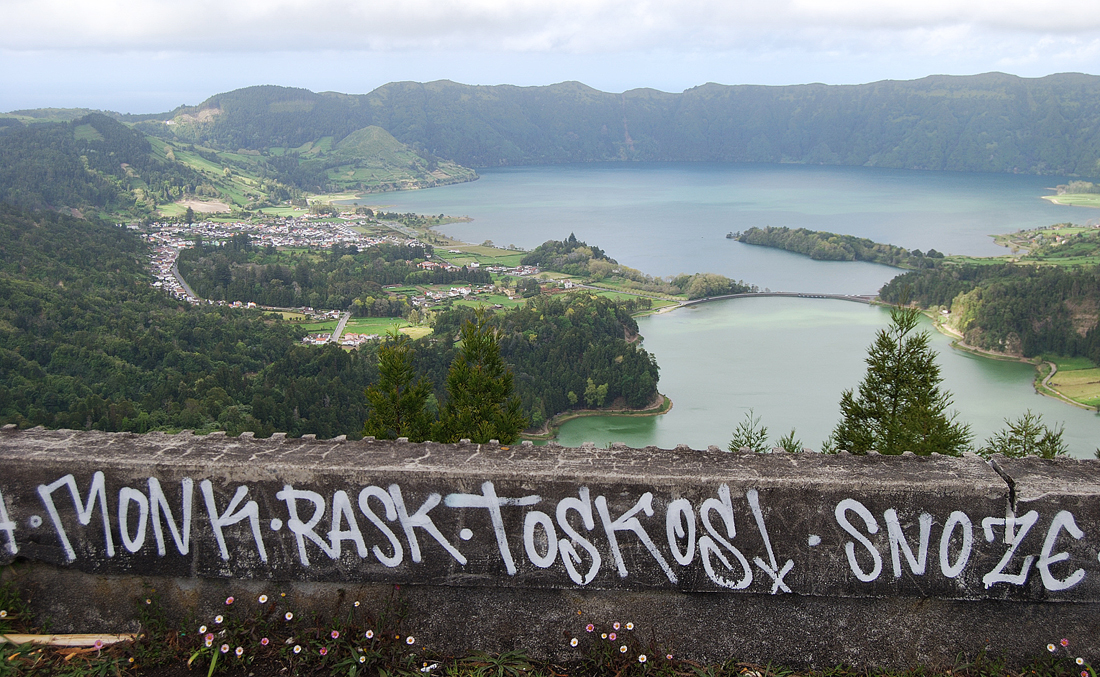
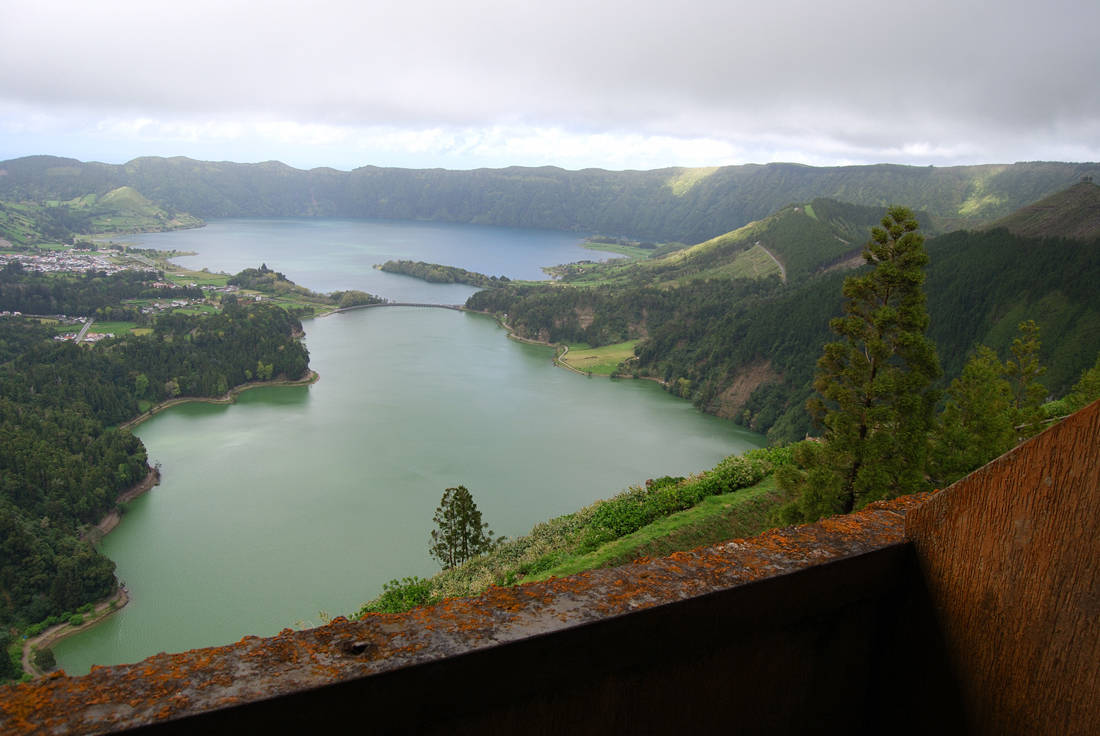
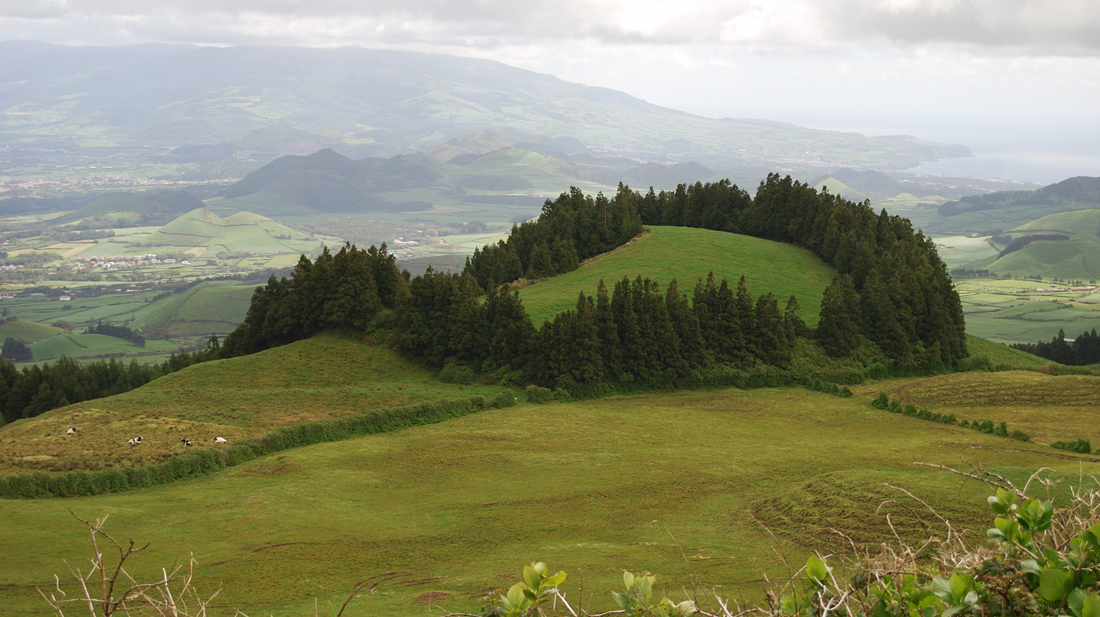
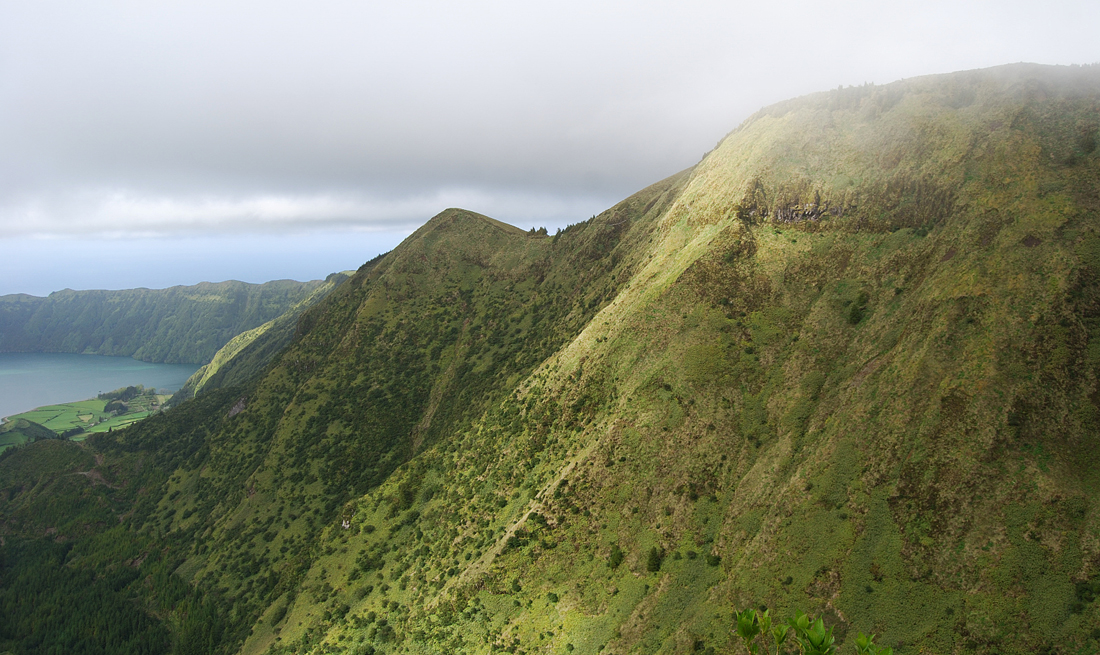
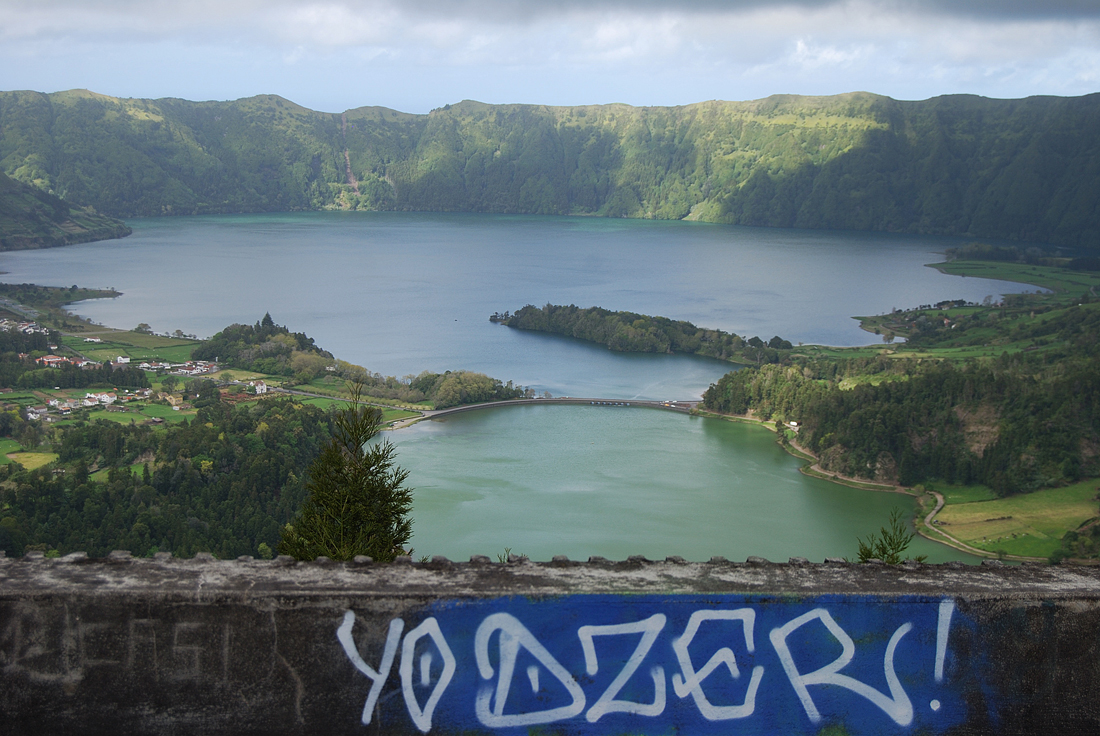 There were countless overlook points in São Miguel, offering spectacular views of Sete Cidades and its neighboring lagoons, Rasa and Santiago. Just a short hike or drive up to the trail peaks led us to these vistas. The decrepit Monte Palace at Vista do Rei was practically a relic, but it still offered what was probably the best view of the lakes from its rooftop. Even with all the graffiti on the walls and signs of vandalism, the place captured the imagination.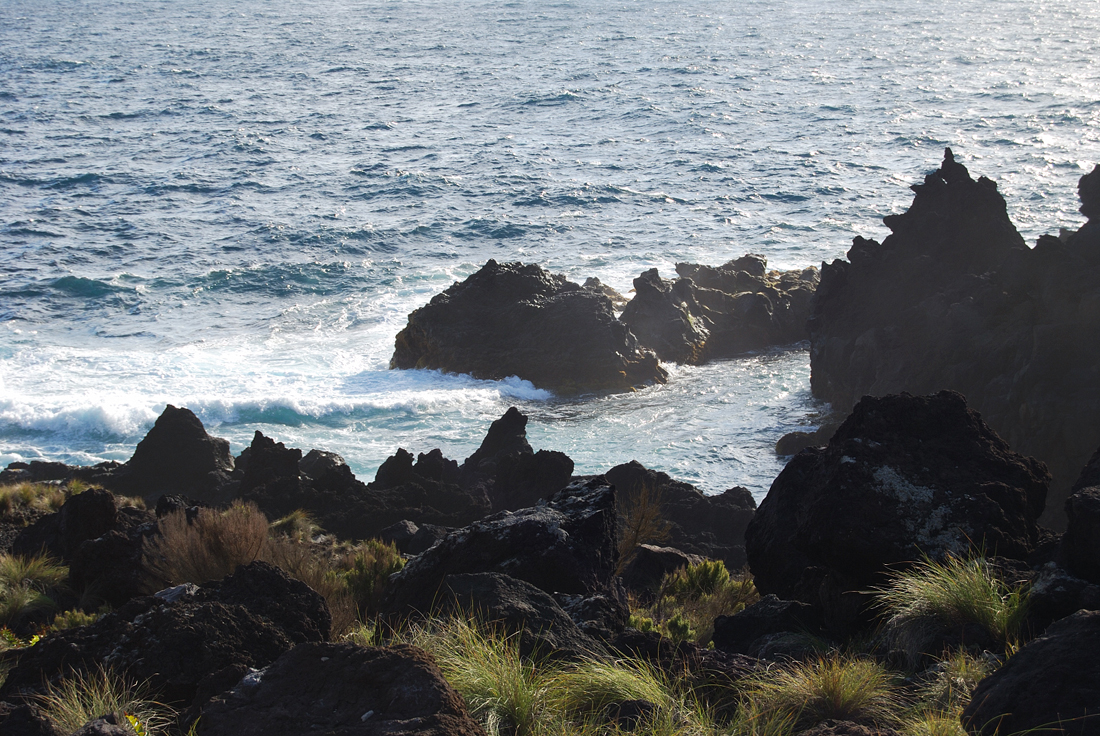
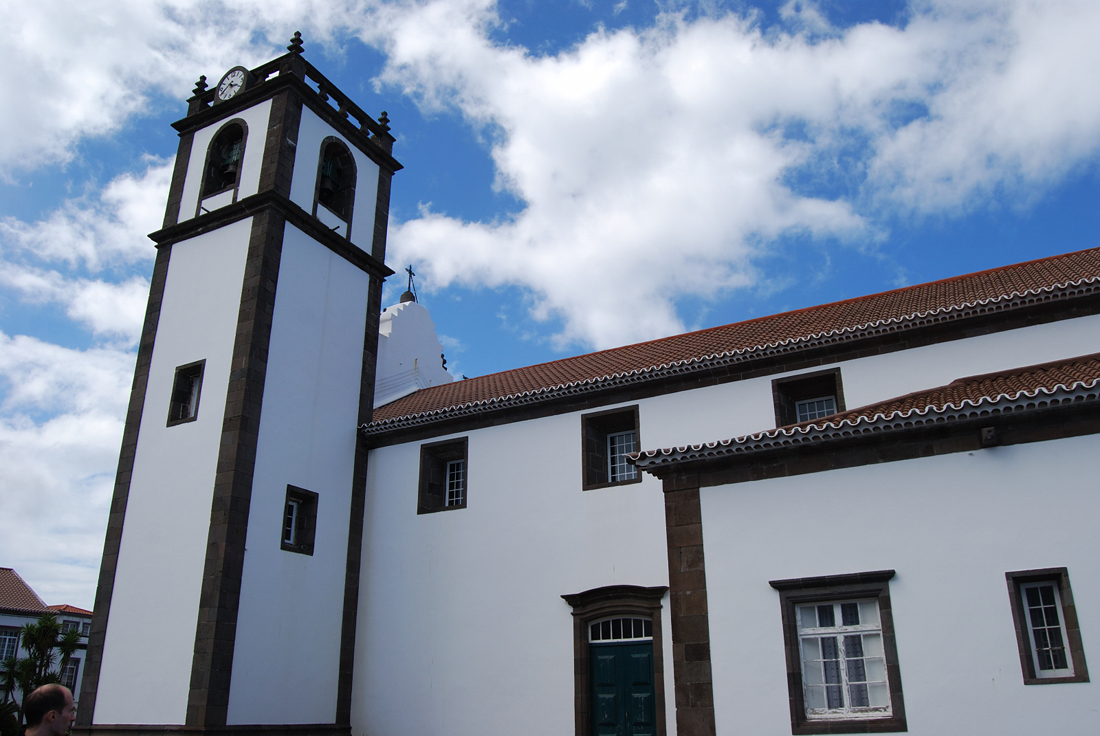
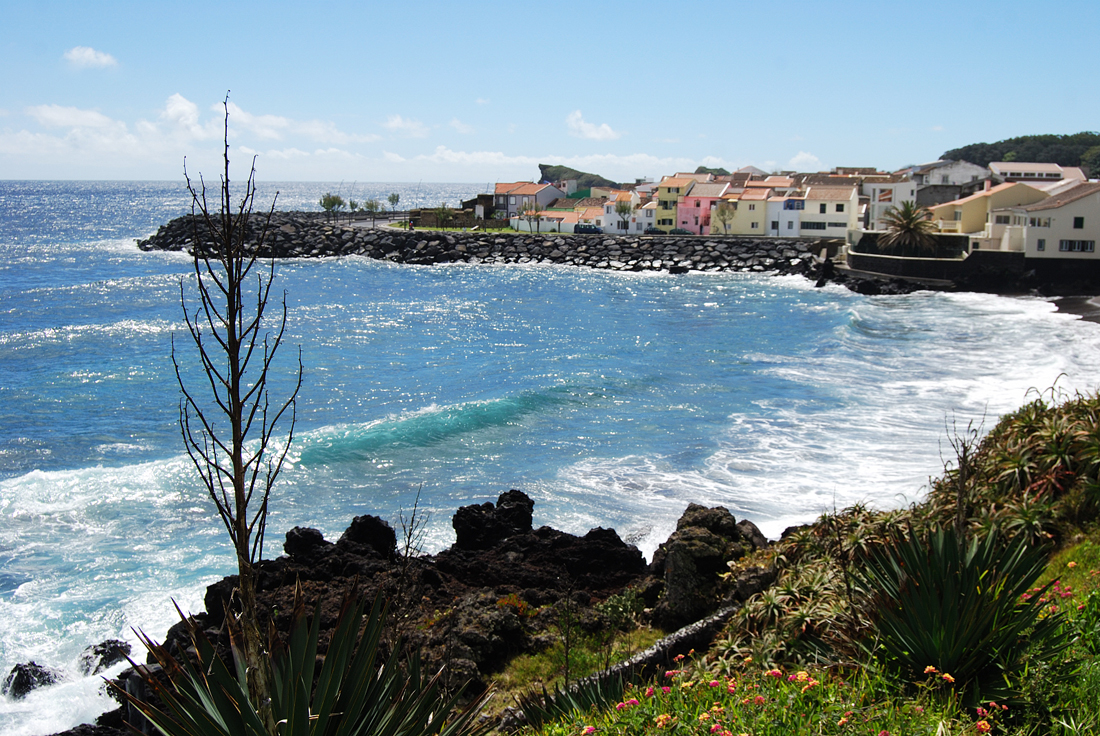
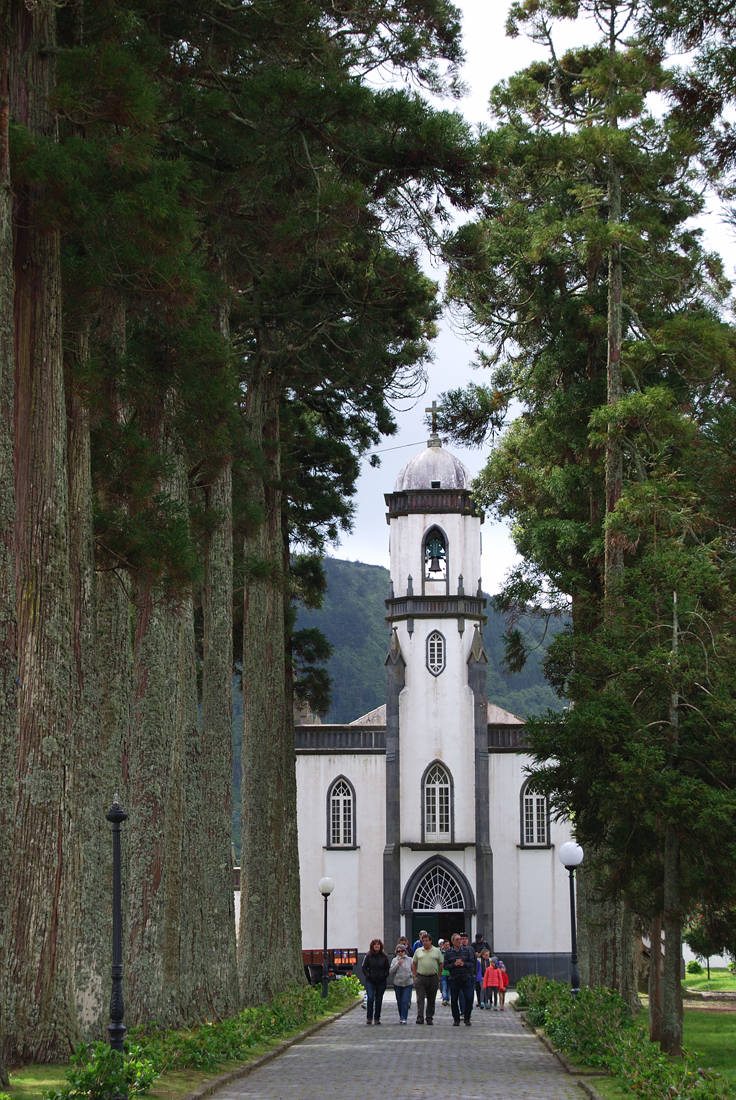
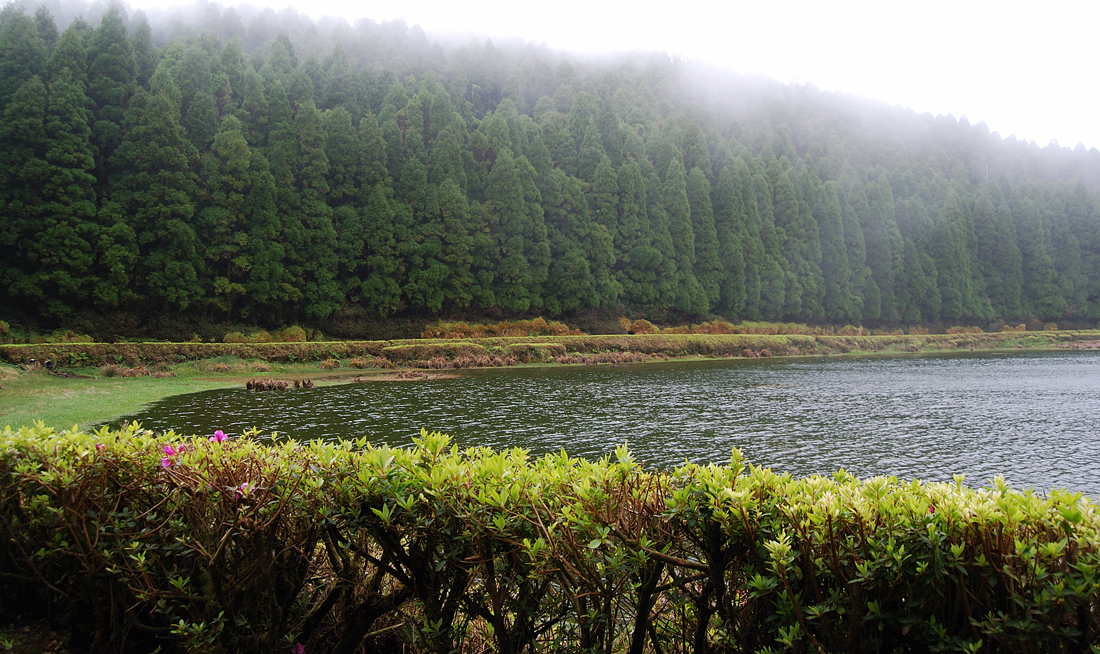
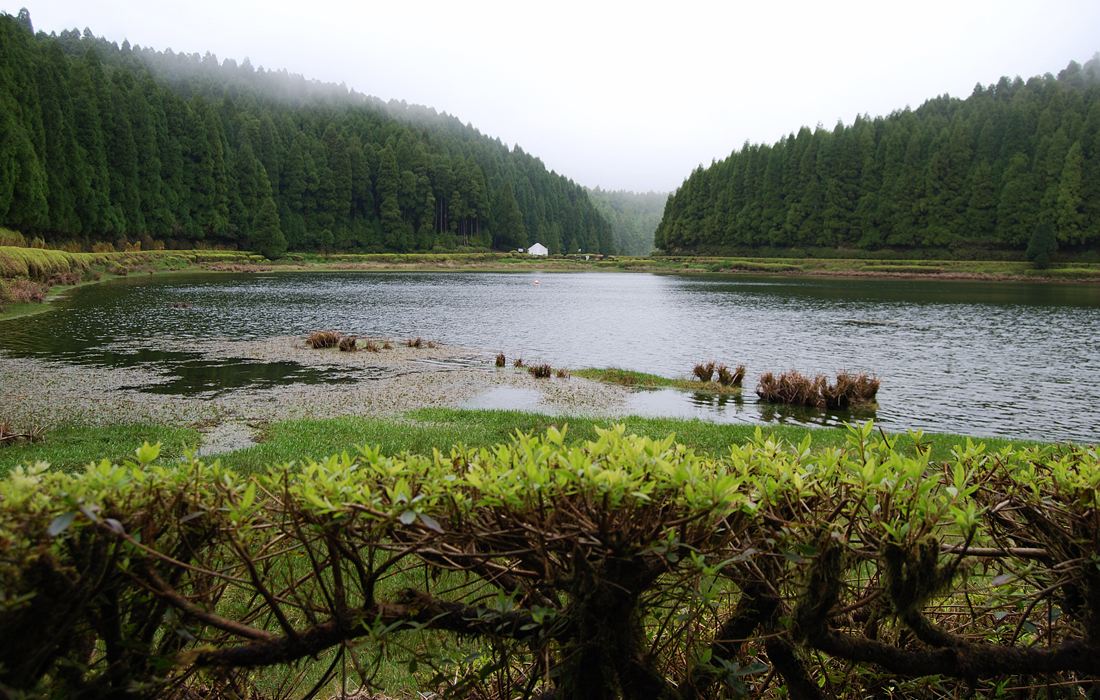
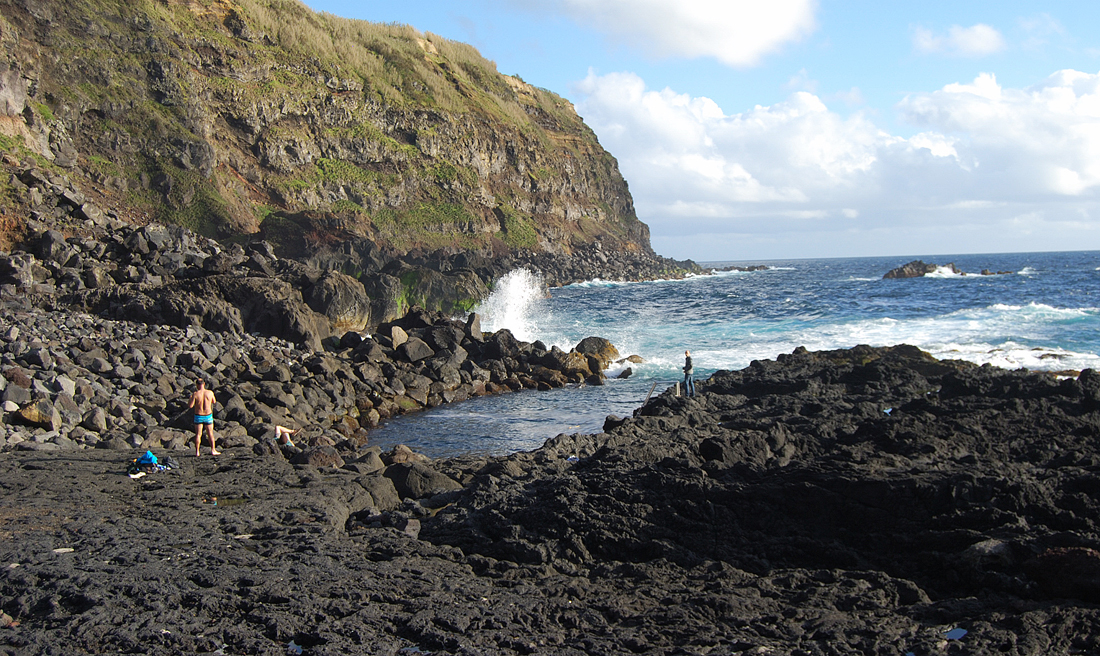
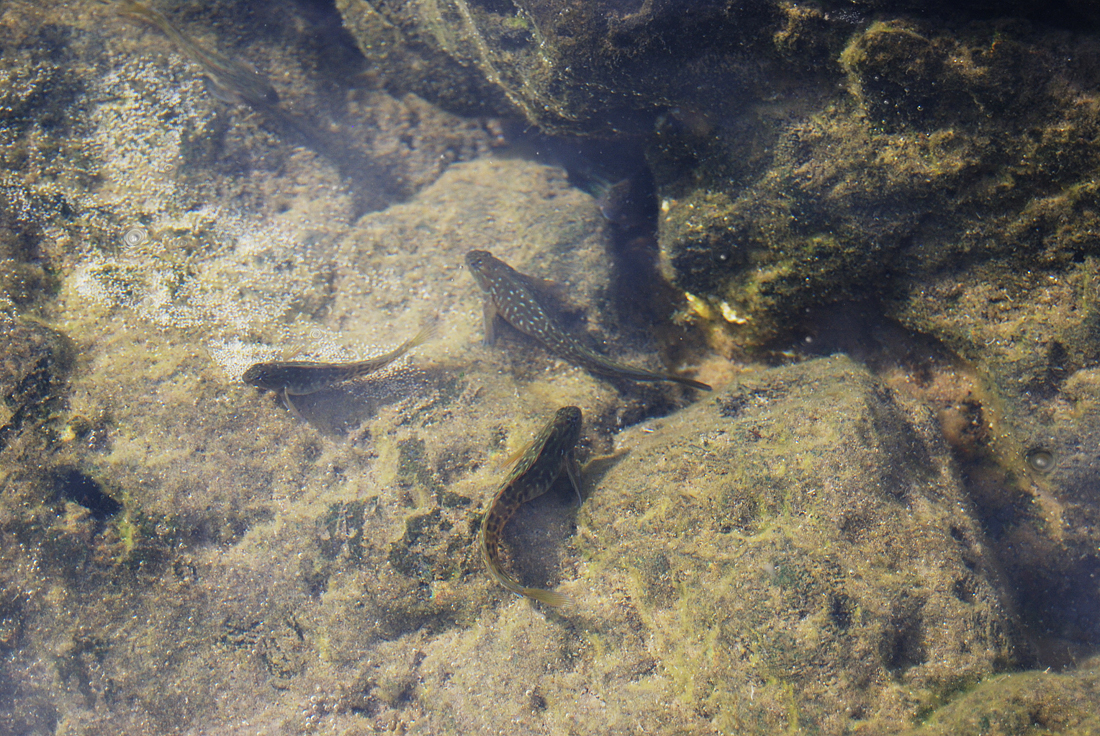
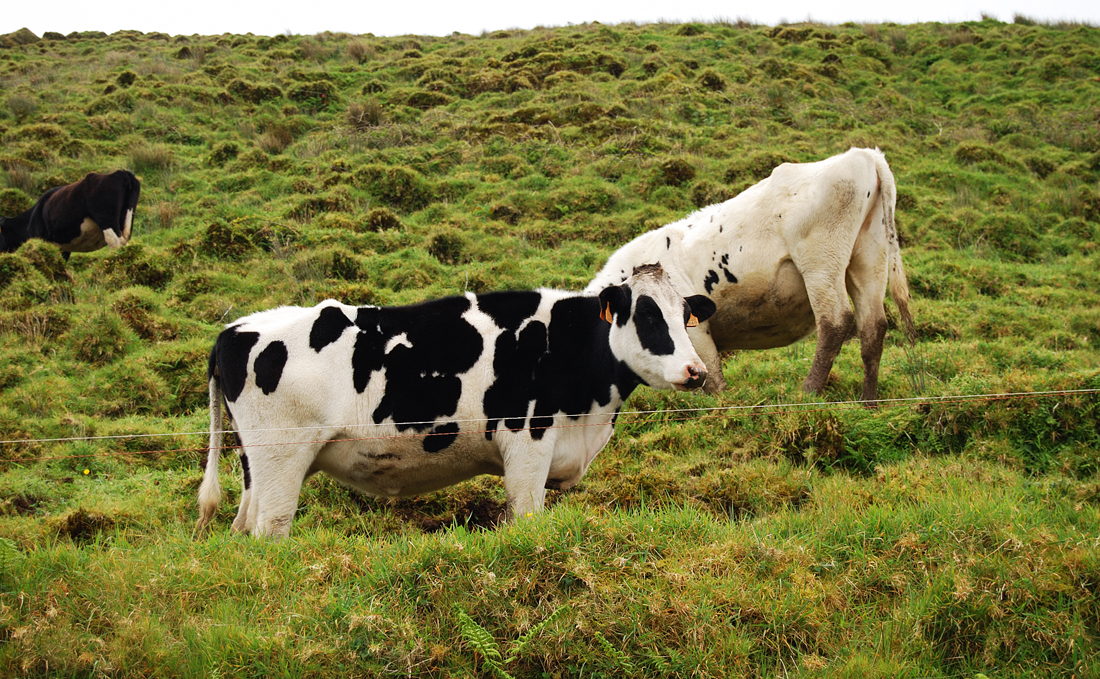
There were a number of other special places in the Western part of São Miguel. Lagoa das Empadadas was wrapped in a beautiful, thick mist that flowed with the wind like a spirit orchestrating the tightly packed trees. Ponta da Ferraria was a point in the ocean warmed by a hot spring. The surrounding rocks held small pools and ecosystems with fish of varying sizes. The area around the São Nicolau Church also had its own charm, with the colorful houses and street corners guarded by cows, cats, and dogs.
View Gallery







Leave a Reply